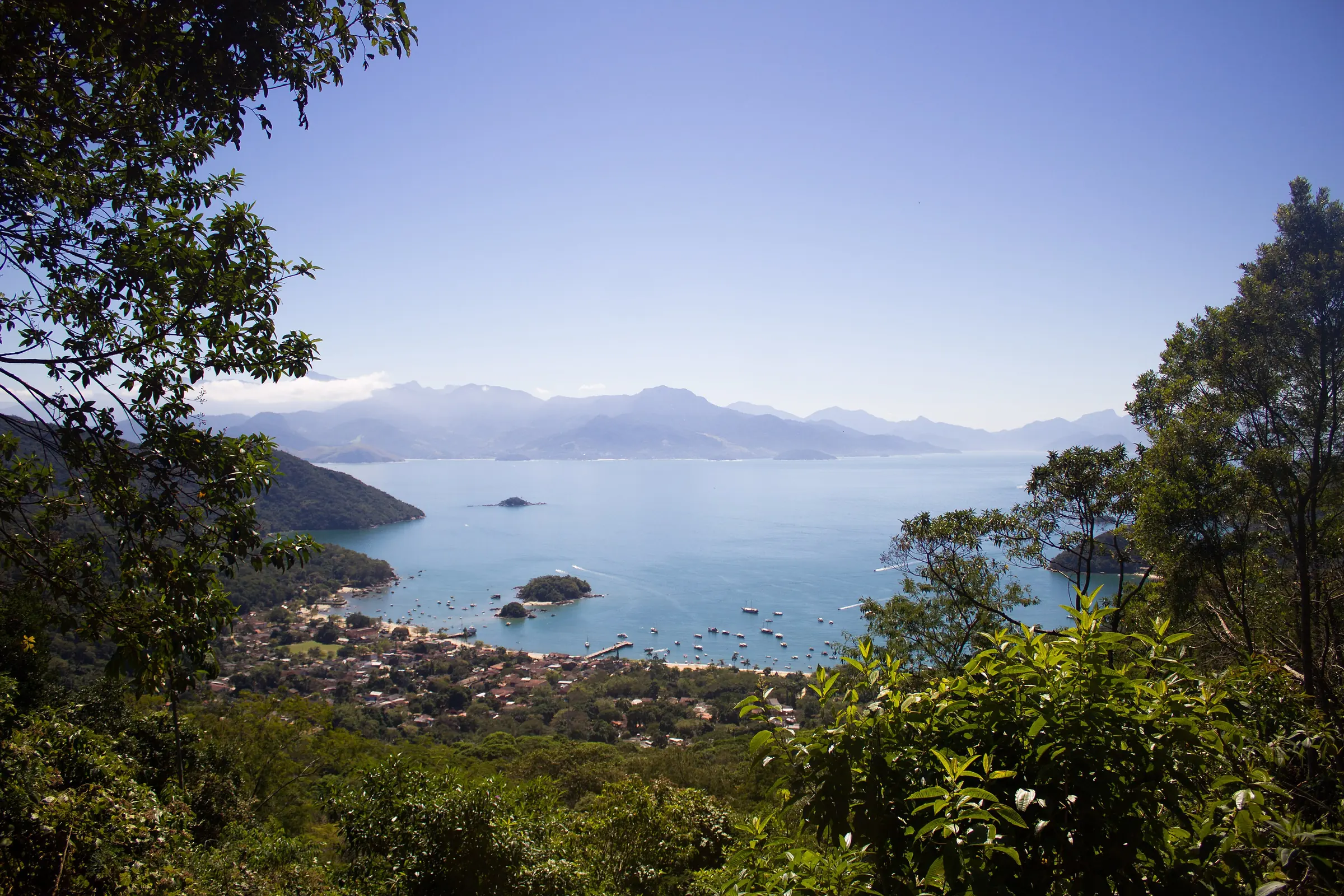
View through the rainforest over the bay of Vila do Abraão on Ilha Grande, with boats at anchor and mountains behind

Rio de Janeiro state · Costa Verde

Ilha Grande

No cars, no roads. Just trails and boats.

An hour off the coast between Rio de Janeiro and Paraty lies an island the modern world mostly forgot to develop. There are no cars on Ilha Grande and almost no roads. To get anywhere you either walk a forest trail or take a boat, and that single fact shapes everything: more than a hundred beaches, a rainforest that runs straight into the sea, and a pace that drops the moment you step off the boat.

Plan My Trip Explore the island

Where

Costa Verde, between Rio and Paraty

Getting there

Transfer to the coast, then speedboat

Getting around

On foot or by boat, no cars

Suggested stay

2–3 nights

Why Ilha Grande

The island the modern world skipped.

Ilha Grande should, by rights, be a resort strip. It is a large, gorgeous island a short hop from two of Brazil’s biggest draws, Rio de Janeiro and the colonial town of Paraty. Instead it is a protected reserve of Atlantic rainforest with no cars, no real roads, and more than a hundred beaches, most of them undeveloped. The reason is its strange history.

For most of the last century the island was somewhere you were sent, not somewhere you visited. It held a quarantine station, a leper colony and, for decades, one of Brazil’s most feared prisons. That kept tourism and development away entirely, and when the prison was finally torn down in the 1990s what remained was an island frozen in a wilder time. The dark past is exactly why the nature is so intact.

What that leaves you with today is rare: an island you explore the slow way, on foot through the forest or by boat around the coast, where the busiest thing that happens is a schooner pulling into a cove. It is the barefoot, switch-off chapter of a Brazil trip, and it pairs perfectly with the buzz of Rio just up the coast.
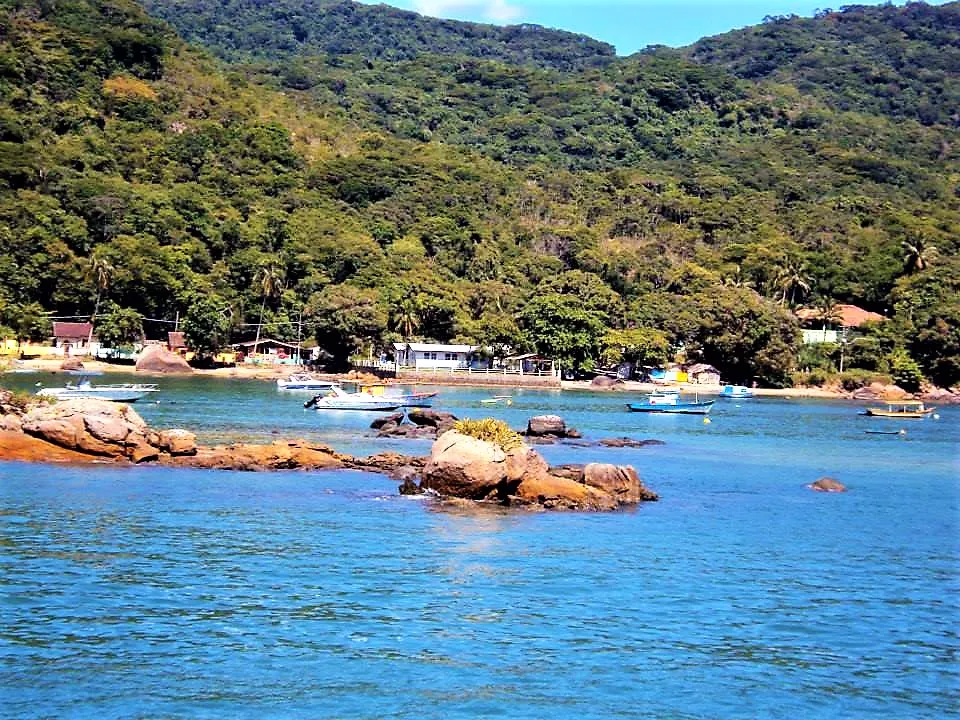
100+ beaches around a single car-free island
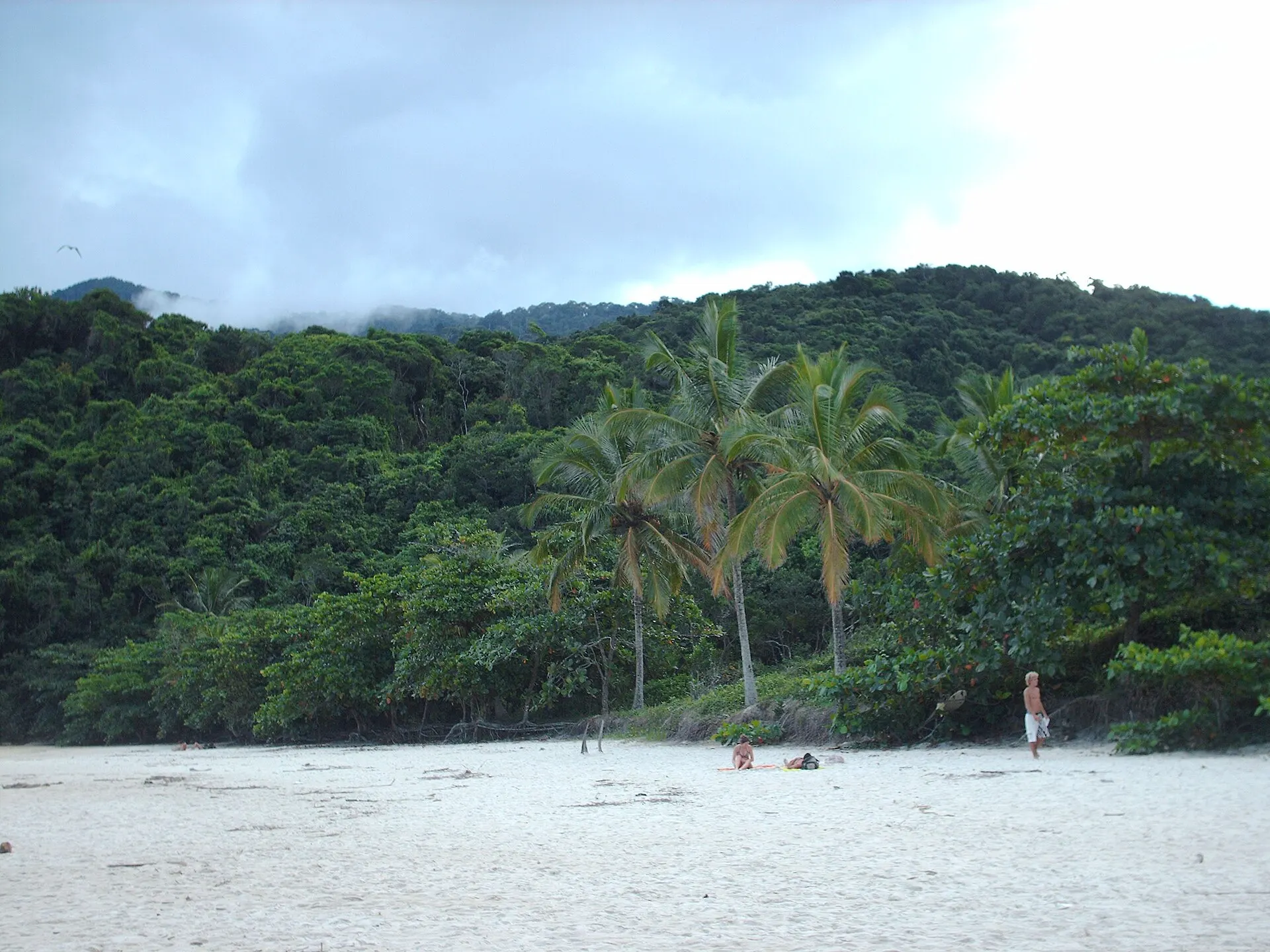
Atlantic rainforest tumbling down green hillsides straight into the sea on Ilha Grande
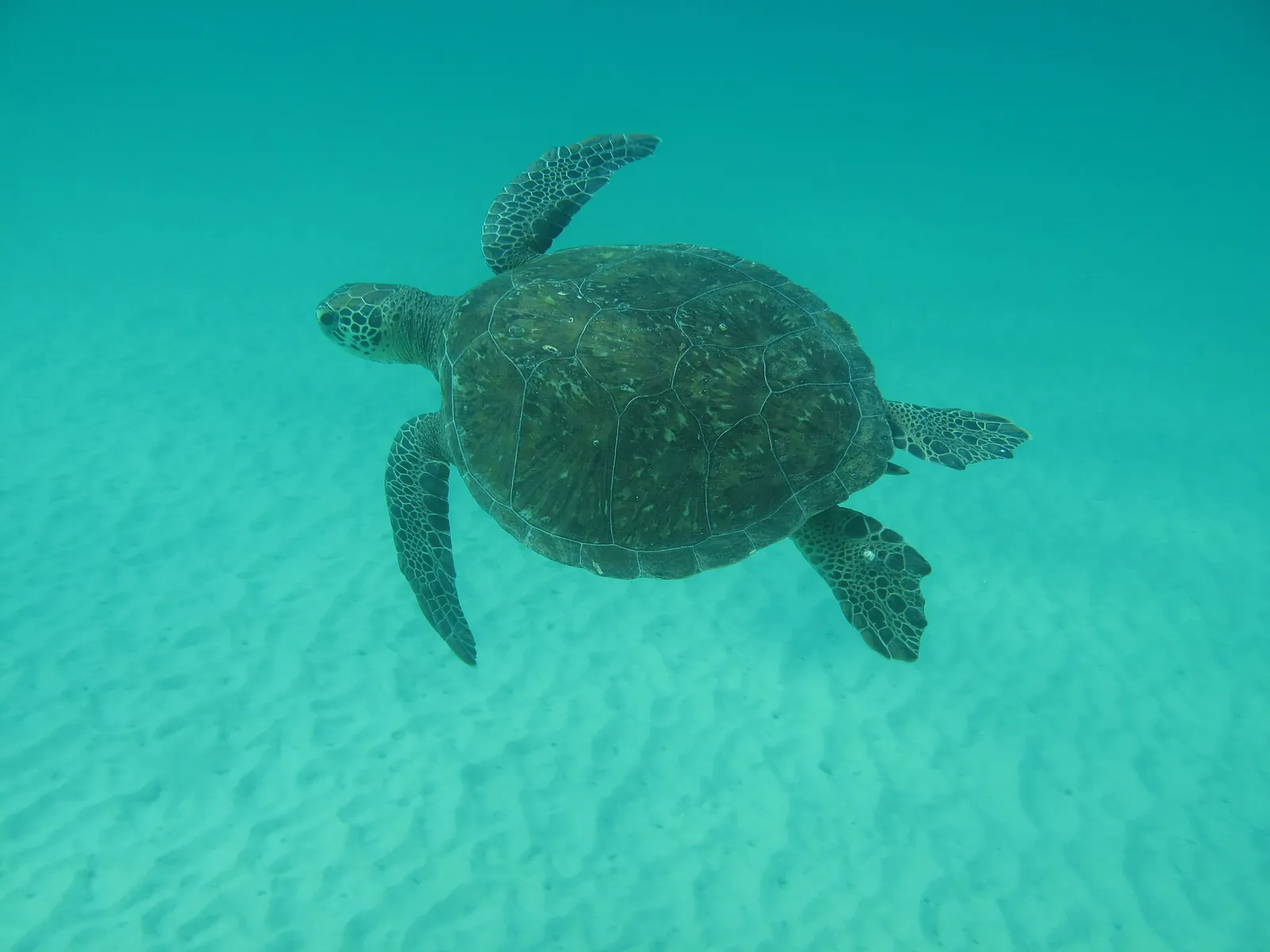
A green sea turtle gliding over pale sand in the clear water off Lopes Mendes, Ilha Grande

How the island works

On foot, or by boat. That’s it.

There are no cars to hire and no coastal road to drive. Every beach, viewpoint and village is reached one of two ways, and understanding the trade-off between them is the key to planning your days.

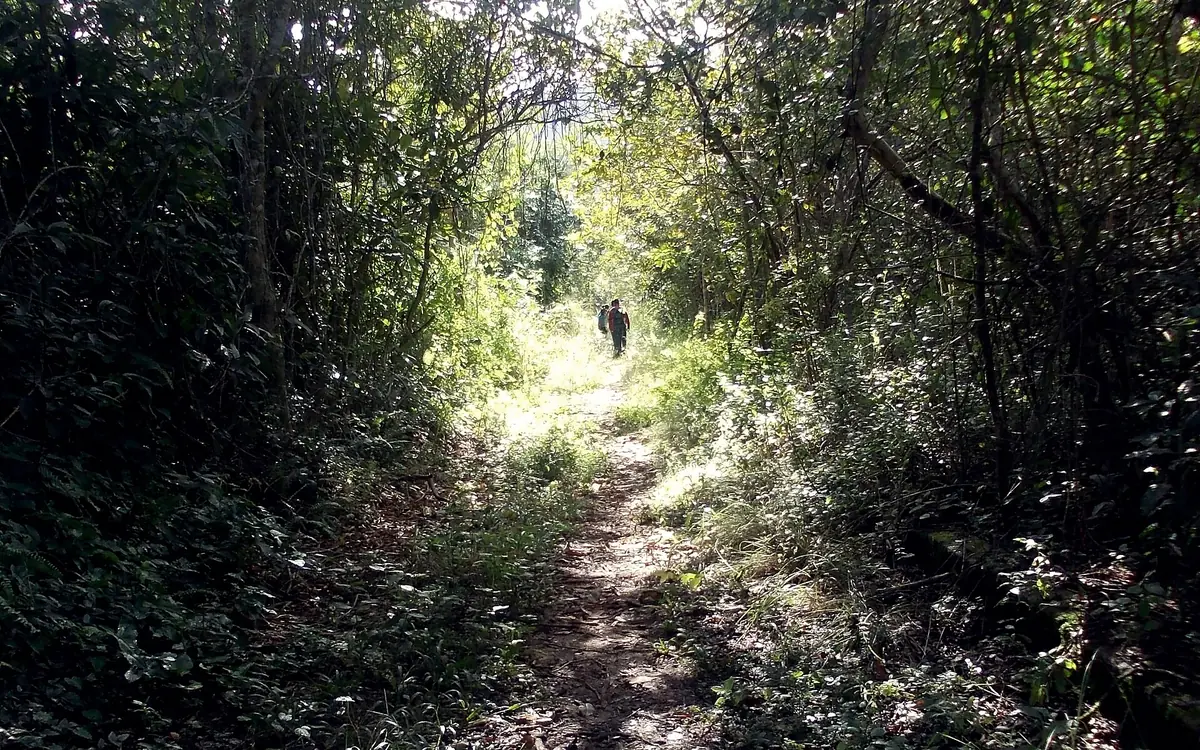
A narrow rainforest trail winding through dense green jungle on Ilha Grande

On foot

The forest trails

A network of numbered trails threads through the island’s rainforest, linking the beaches and climbing to its peaks and old lighthouses. Some are gentle twenty-minute strolls over a headland; others are serious half-day hikes through dense jungle, sweated for and rewarded. Walking is how you reach the wildest, emptiest corners, and how you see the forest and its wildlife rather than just the coast. Bring proper shoes and water, because distances that look short on a map can be long and steep on the ground.

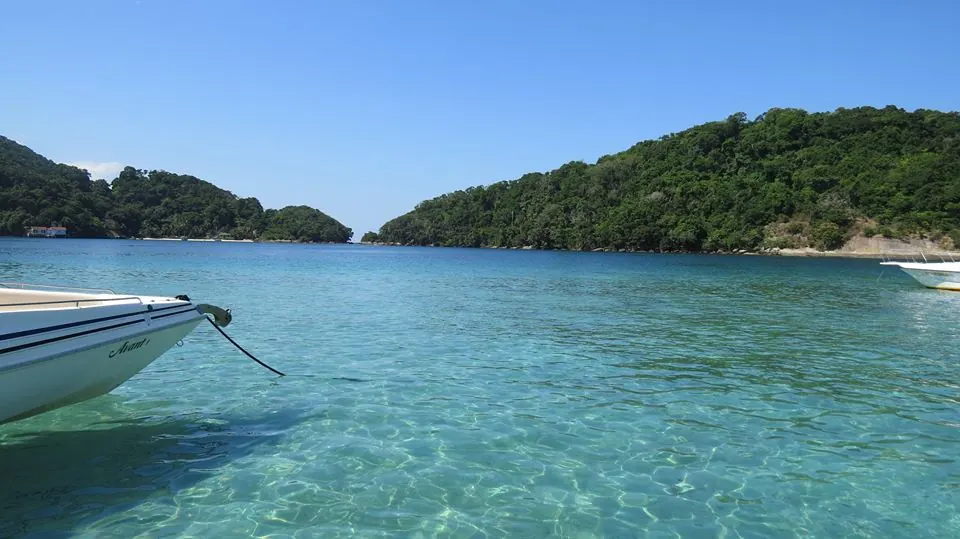
The bow of a boat over glass-clear turquoise water in a forested cove off Ilha Grande

By boat

The water taxis and schooners

The faster, easier way around is on the water. Small water taxis run between beaches, private boats can take you wherever you like on your own schedule, and traditional wooden schooners make relaxed day loops around the coast with swim and snorkel stops. For the far-flung beaches, a boat turns a punishing multi-hour trek into a breezy half-hour cruise. Most good island days mix the two: a boat out to a beach, a short forest walk to reach the sand, and a boat back.

Where you’ll base

Vila do Abraão, the island’s one real village.

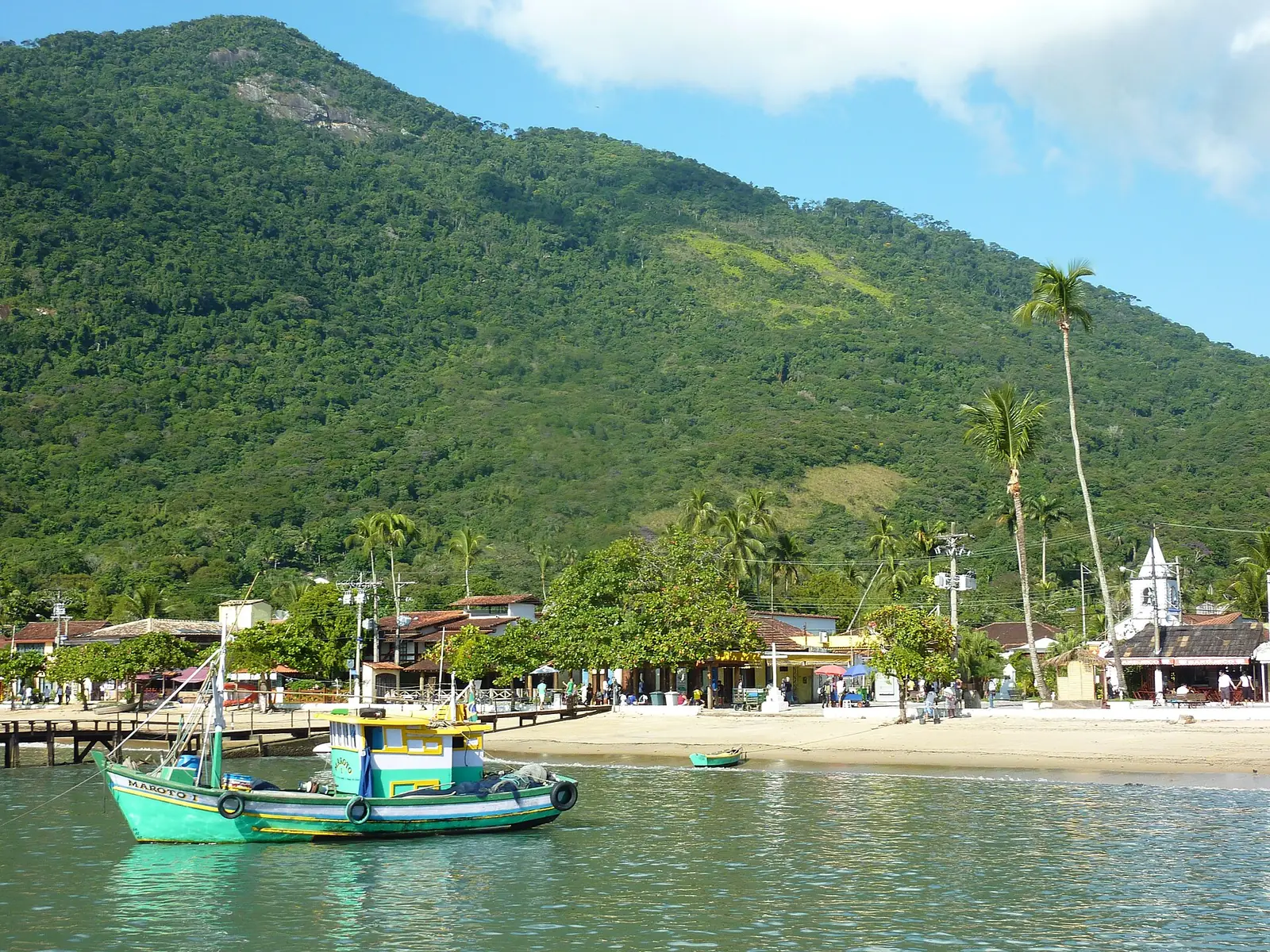
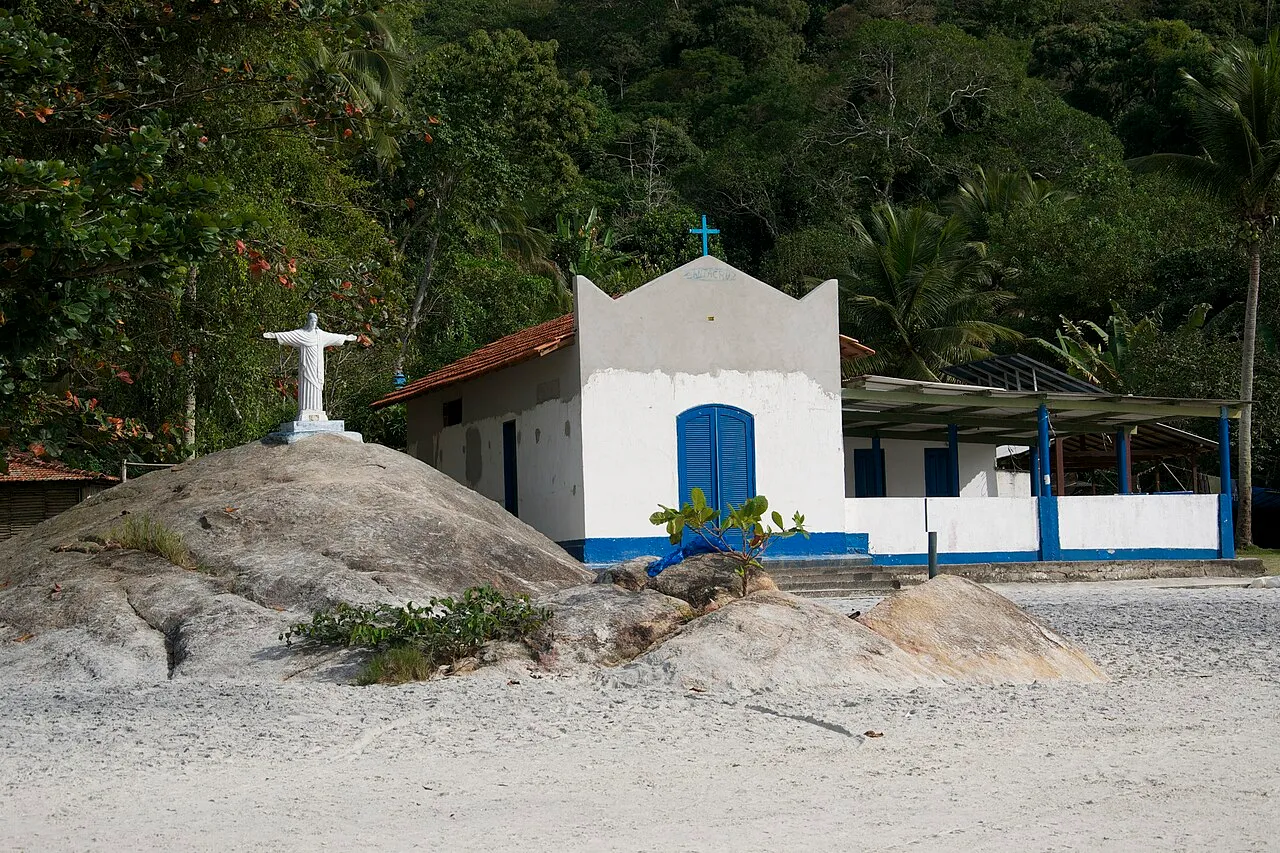
A fishing boat in front of the beach, palms and church of Vila do Abraão on Ilha Grande

Boats from the mainland land at Vila do Abraão, a small village of sandy lanes strung along a curved bay on the island’s sheltered north coast. It is the island’s only real hub: nearly all the pousadas, restaurants and dive shops are here, along with the pier where the boats come and go. Days start and end in Abraão, and it is where the car-free calm is strongest, with people wandering the lanes on foot, boats bobbing offshore, and forested peaks rising straight behind the rooftops. A short walk from the village lie the ruins of the old Lazareto quarantine station and its aqueduct, a first quiet hint of the island’s past.

The island, corner by corner

The beaches, the peak, and the ghosts.

A handful of places give Ilha Grande its reputation. These are the ones worth building your days around.

The long white-sand crescent and clear green water of Lopes Mendes beach
The star beach

Lopes Mendes

If Ilha Grande is famous for one thing, it is this beach. Lopes Mendes is a long, straight kilometre of fine white sand so soft it squeaks underfoot, backed by nothing but forest and fronted by clear green water with a gentle surf. It is regularly ranked among the most beautiful beaches in Brazil, and because no building is allowed behind it, it looks much as it always has.

Getting there is part of it. Most people take a boat to the neighbouring beach and then walk fifteen or twenty minutes over a forested headland, the reveal of that endless sand through the trees being half the magic. There are no kiosks and little shade, so bring water and give yourself the whole afternoon.

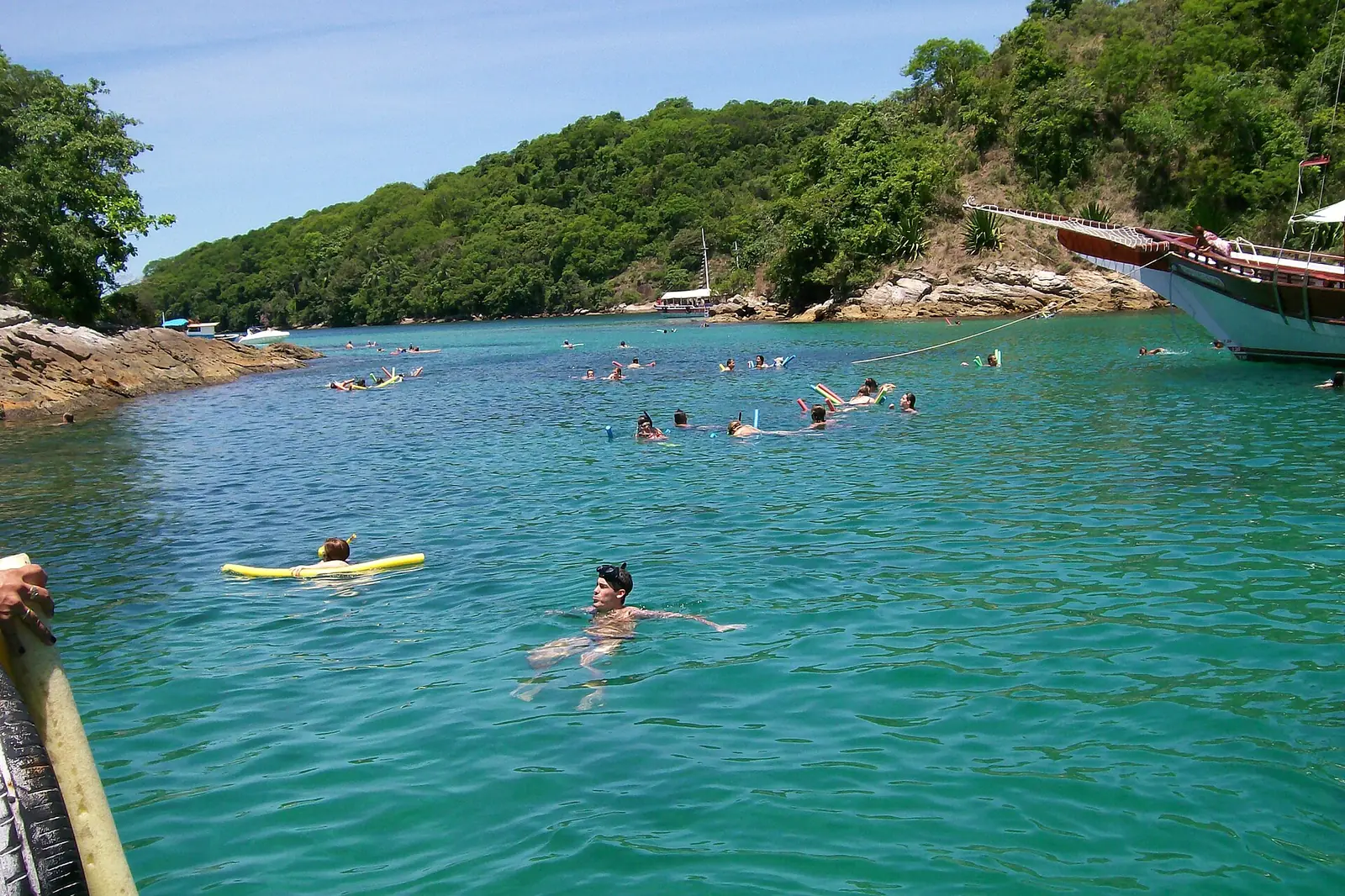
Snorkellers in the glass-clear turquoise water of the Blue Lagoon off Ilha Grande
The classic boat day

The Blue Lagoon and the schooner circuit

The quintessential Ilha Grande day happens on the water. A boat loops the sheltered coast, stopping wherever the sea is clearest, and the highlight is the Lagoa Azul, the Blue Lagoon: a shallow, protected patch of glass-clear turquoise water where you slip off the boat and snorkel among shoals of fish in water as warm and calm as a bath.

Traditional wooden schooners run the classic circuit with several swim stops, or a private boat lets you set the route and linger where you like. Either way it is a slow, sunlit day of anchoring in coves, swimming, and watching the forested island slide past.

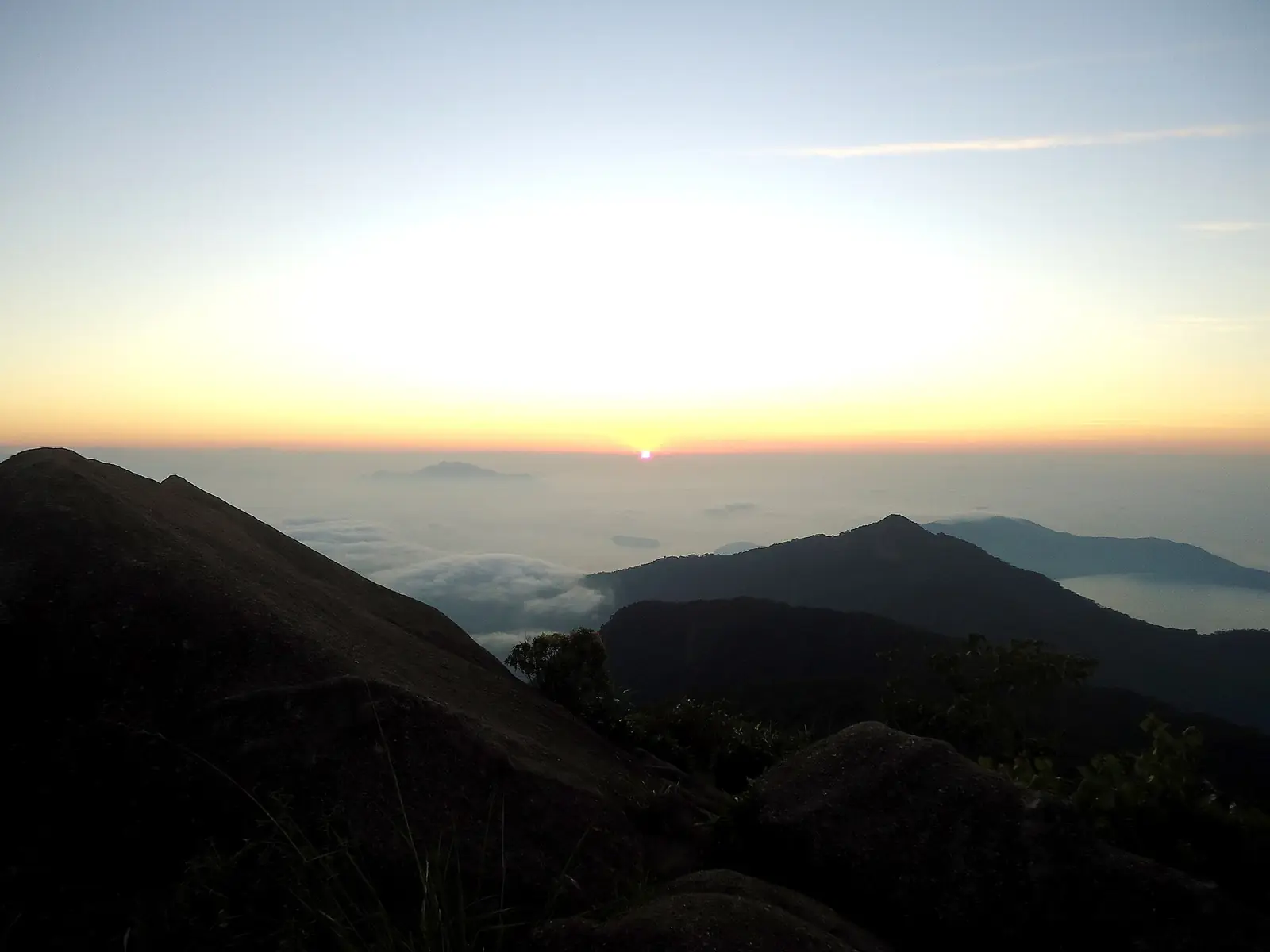
Sunrise view from the granite summit of Pico do Papagaio over the island and its bays
The summit hike

Pico do Papagaio at sunrise

For the fit and the willing, the island’s signature climb is Pico do Papagaio, the Parrot’s Peak, a granite dome standing nearly a thousand metres over the sea. The classic way to do it is to set off in the dark, a few hours before dawn, and climb through the rainforest by headlamp to reach the summit just as the sun comes up.

The reward is one of the great views on the Brazilian coast: the whole island and its bays laid out below, the mainland mountains beyond, and the sea scattered with smaller islands, all of it turning gold. It is a demanding hike with a scramble near the top, and worth every step.

The iconic wind-bent palm leaning over the water at Aventureiro beach
The wild side

Aventureiro and the outer beaches

The island’s ocean-facing side is a different, wilder place. Exposed to the open Atlantic, it has surf, wind, and a handful of remote beaches that see a fraction of the visitors. The most famous is Aventureiro, whose photogenic wind-bent palm leaning low over the water is one of the island’s iconic images, part of a protected community reserve.

These beaches, Aventureiro, Caxadaço, Praia do Sul, take real effort to reach, by long boat ride or serious hike, which is exactly why they stay so empty. This is the Ilha Grande for travellers who want to feel like they have found the edge of the map.

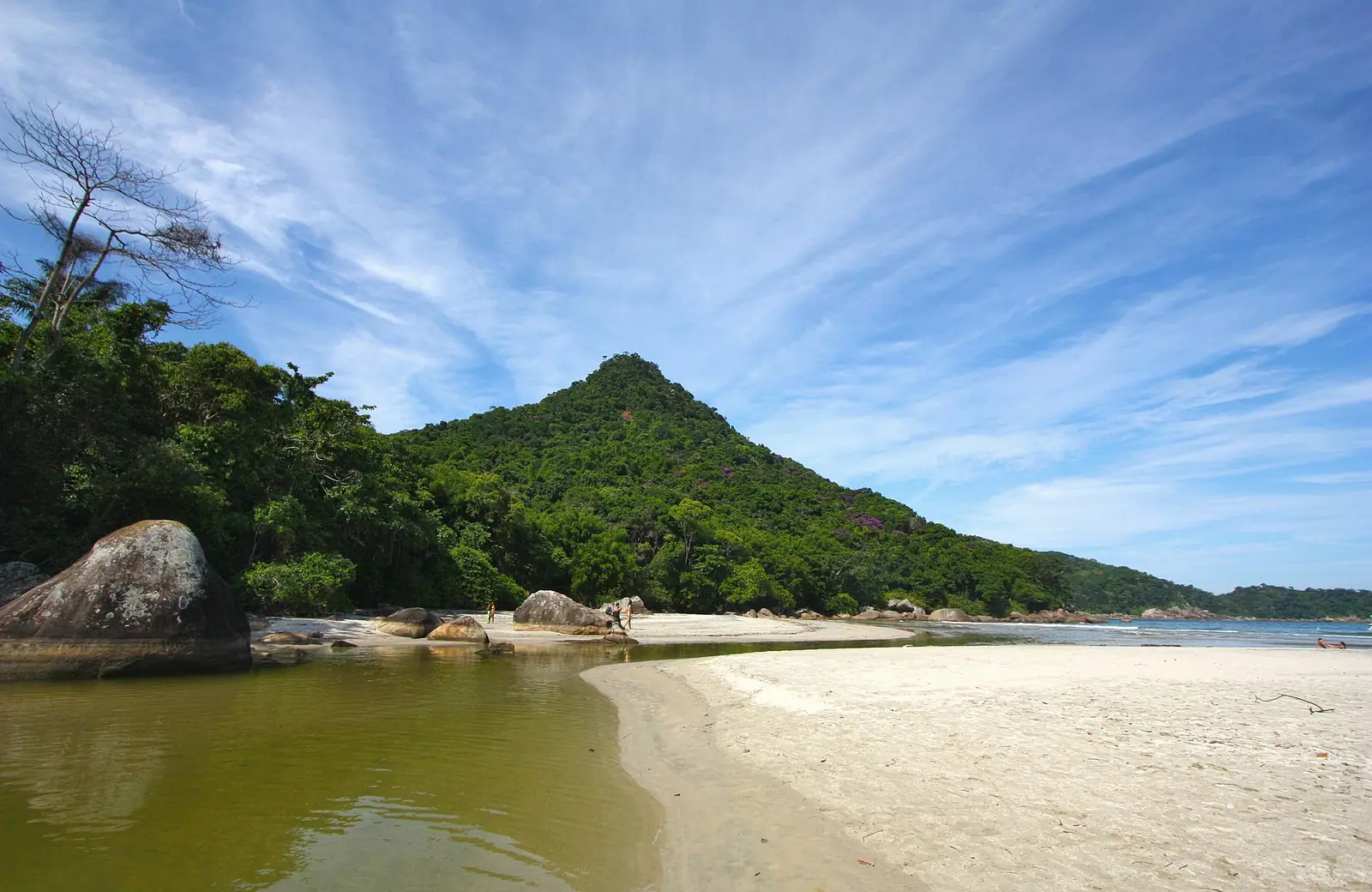
The river meeting the empty double beach at Dois Rios on Ilha Grande, forest peak behind
The dark past

The ruins at Dois Rios

To understand why Ilha Grande is so wild, walk to Dois Rios. On the island’s far side, reached by a couple of hours on a forest trail or by boat, sit the ruins of the Cândido Mendes penitentiary, once one of Brazil’s most notorious prisons, torn down in 1994. A small museum now tells the island’s long story as a place of quarantine and imprisonment, set against a beautiful, empty double beach.

It is a striking, slightly haunting contrast: paradise with a heavy history. Nearer Abraão, the crumbling Lazareto aqueduct tells the earlier chapter, when the island was a quarantine station. For anyone who likes their beaches with a story, this is the island’s most memorable half-day.

Handpicked experiences

Our favourite ways to spend the days.

We don’t list every tour on the island, only the ones we would actually send you on: privately guided, run with trusted local skippers and guides, and shaped around the weather on the day.

Classic

Blue & Green Lagoons by speedboat

6 h

A morning on the island’s gentlest water: snorkelling the glass-clear Blue Lagoon among curious fish, a swim in the Green Lagoon, a slow pass through the Bay of Stars and a barefoot lunch stop. Cooler and pool noodles on board, masks ready when you are.

Signature

Private speedboat to the paradise islands

7 h

Your own boat, your own route: out to the twin Botinas islets rising from emerald water, snorkel stops over rocks busy with marine life, and white-sand Dentista beach almost to yourselves. The day bends to you, not to a schedule.

Classic

Hike to Lopes Mendes, return by boat

6–8 h

A privately guided trail from Abraão over forest ridges and past quiet coves, around three hours of honest walking, until the path opens onto that famous white sand. Swim, stretch out, stay as long as you like. A boat brings you home.

Insider tip

Pico do Papagaio, privately guided

9 h

The island’s great adventure: a private climb through the rainforest to the parrot-beak summit at 982 metres, timed for sunrise if you like. Guide, flashlights and insurance included; strong legs required. On clear days the view reaches all the way to Rio.

Classic

Slow beach days

As long as you like

The island’s quietest luxury: no cars, no schedule, no shoes. Wander from the pousada to the village beach, nap under a tree, take a water taxi to whichever cove looks most inviting and eat fresh fish with sand between your toes.

Where in Brazil

Ilha Grande on the map

Ilha Grande lies on the Costa Verde in Rio de Janeiro state, between the city of Rio and the colonial town of Paraty, which deserves about two nights of its own before or after the island. You reach it by transfer to the mainland coast and a speedboat across.

Region
Rio de Janeiro state, Brazil
Best season
Apr–Oct (drier, calmer seas)
Base
Vila do Abraão
Ideal for
Beach lovers, hikers, couples
Plan My Trip

Good to know

Before you go

How do you get to Ilha Grande? +

By boat, since the island is car-free. We bring you to the Costa Verde coast by private transfer or comfortable shuttle from Rio de Janeiro, São Paulo or Paraty, and a speedboat carries you across from a mainland port such as Conceição de Jacareí or Angra dos Reis to the village of Abraão, in as little as about twenty minutes. Every leg is arranged and timed for you, so you never touch a timetable or a ticket queue.

How many days do I need, and what pairs well with the island? +

Two to three nights hit the sweet spot: enough for a lagoon or island boat day, a beach or hiking day and a slow morning before the boat back. The classic pairing is Paraty, the beautifully preserved colonial town just along the coast, which deserves about two nights of its own before or after the island. Rio de Janeiro connects easily on the same route.

How do you get around, and do I need to be fit? +

On foot or by water. There are no cars, so you either walk the forest trails or take boats between beaches. The good news is you can make it as easy or as active as you like. The famous beaches and the Blue Lagoon are reachable by boat with only short walks, so no real fitness is required. The longer trails and the Pico do Papagaio climb are proper hikes for active travellers, but they are entirely optional. Most people mix a couple of gentle boat days with one or two short walks.

When is the best time to visit? +

It is warm all year. April to October is the drier stretch, with calmer, clearer seas that are ideal for boat days and snorkelling. The summer months (December to March) are hotter, greener and busier, with warm water but more frequent heavy showers. For the best water and the fewest crowds, aim for the shoulder months on either side of winter.

Is Ilha Grande safe? +

Yes. It is a small, laid-back island community and one of the more relaxed places on the Brazilian coast, with little of the concern of a big city. The real things to respect here are natural: the sun, the sea and the trails. Walk with water and decent shoes, take boats only with experienced local boatmen, and the island is about as easy-going as travel in Brazil gets.

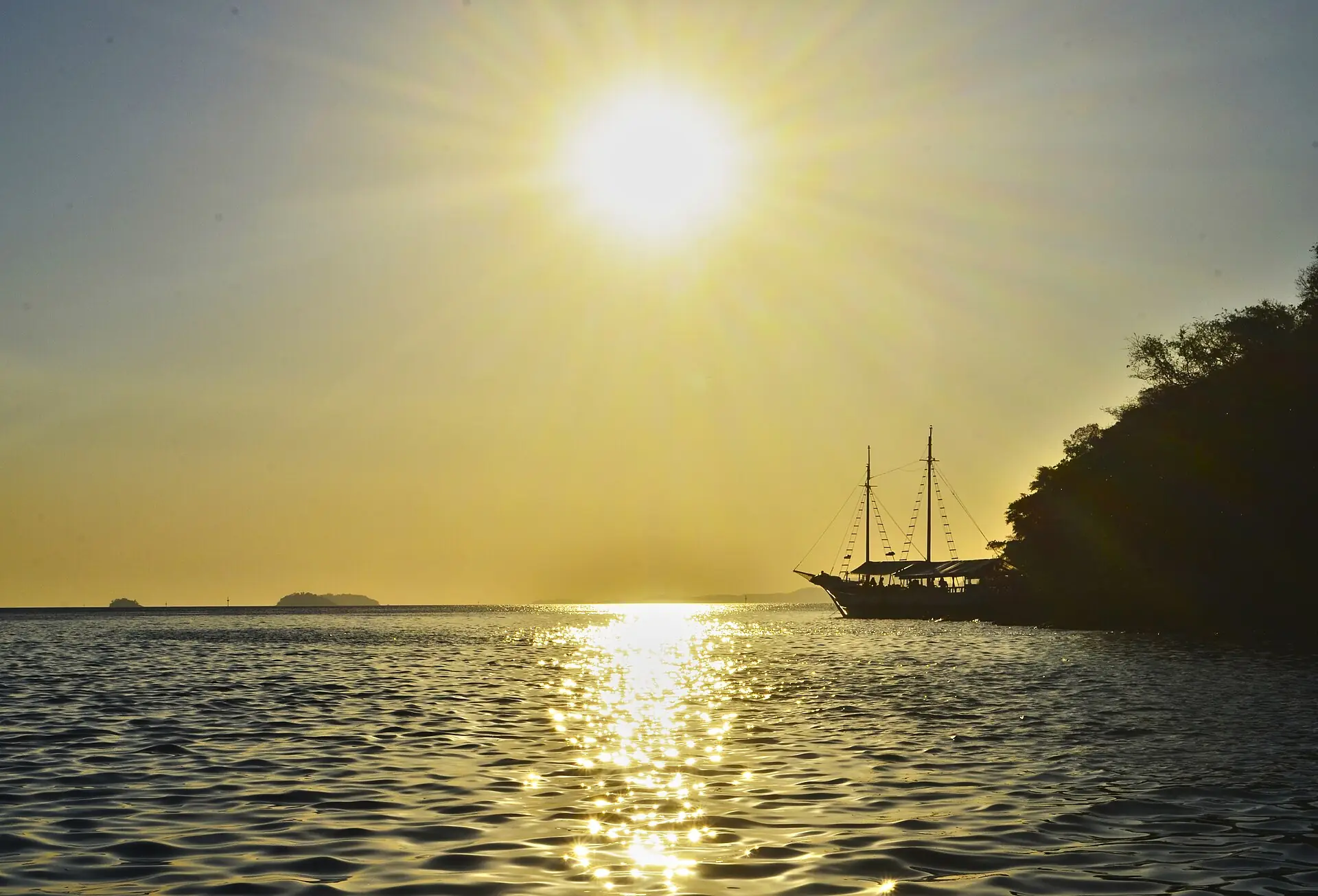
A schooner silhouetted against a golden sunset in a calm Ilha Grande bay

Trade the traffic for trails and boats.

Tell us your dates and we will fold Ilha Grande into your Costa Verde days alongside Paraty and Rio, and shape the island part around exactly how active, or how horizontal, you want to be.

Plan My Trip

Part of bigger trips

Experience Ilha Grande

Ilha Grande features in these guided journeys and experiences, or we weave it into a tailor-made route of your own.

Plan my trip

Tell us about your dream trip

Start with a blank page, share what you have in mind and we design a private trip from scratch. Non-binding & personal, we reply within 24 hours.

  • 24h response
  • Completely non-binding
  • Personal consultation

Rather compose it yourself, stop by stop? Design your own journey

About you

Your trip

OR
Prefer to message us on WhatsApp
Plan My Trip
View my journey