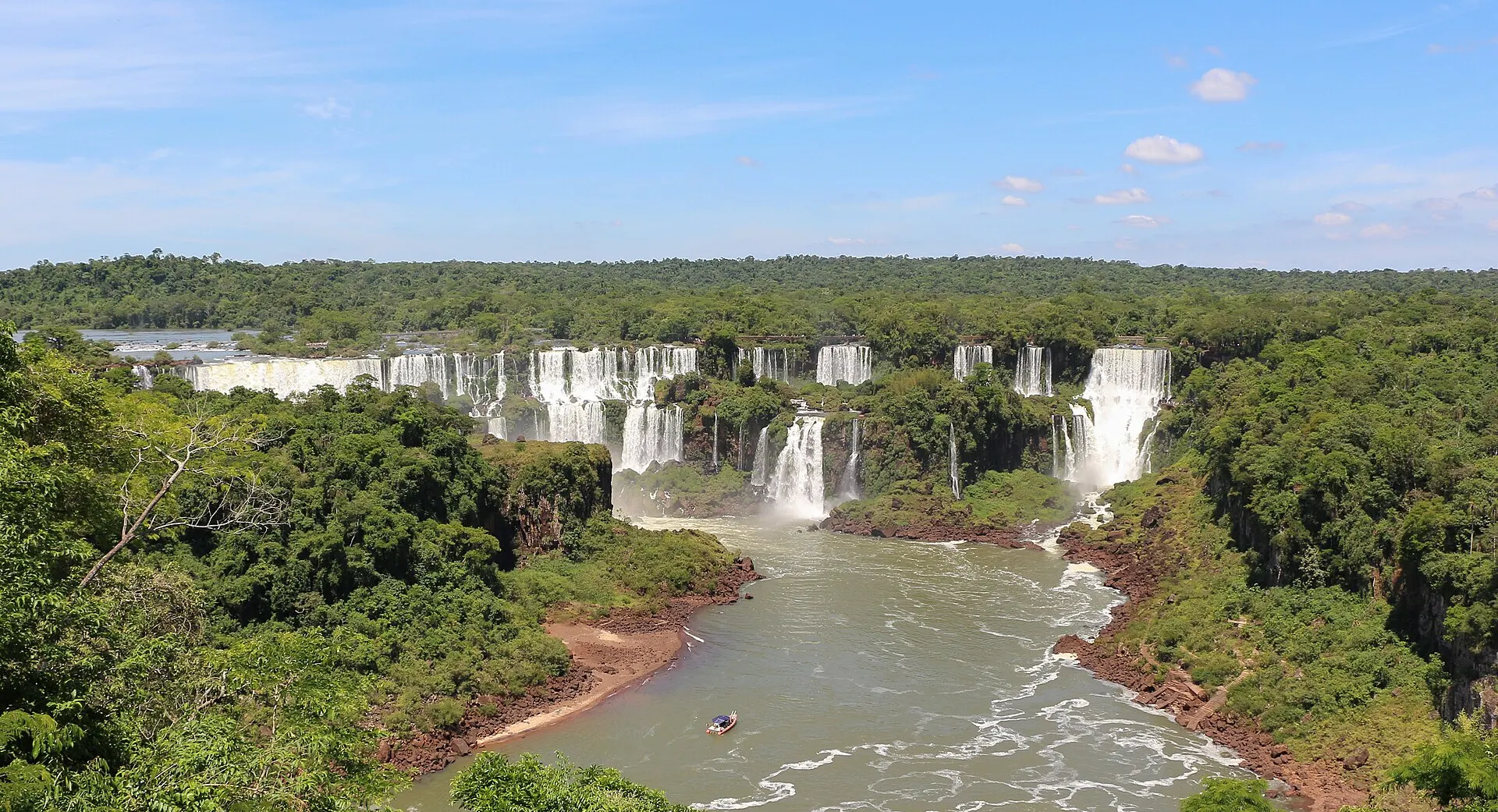
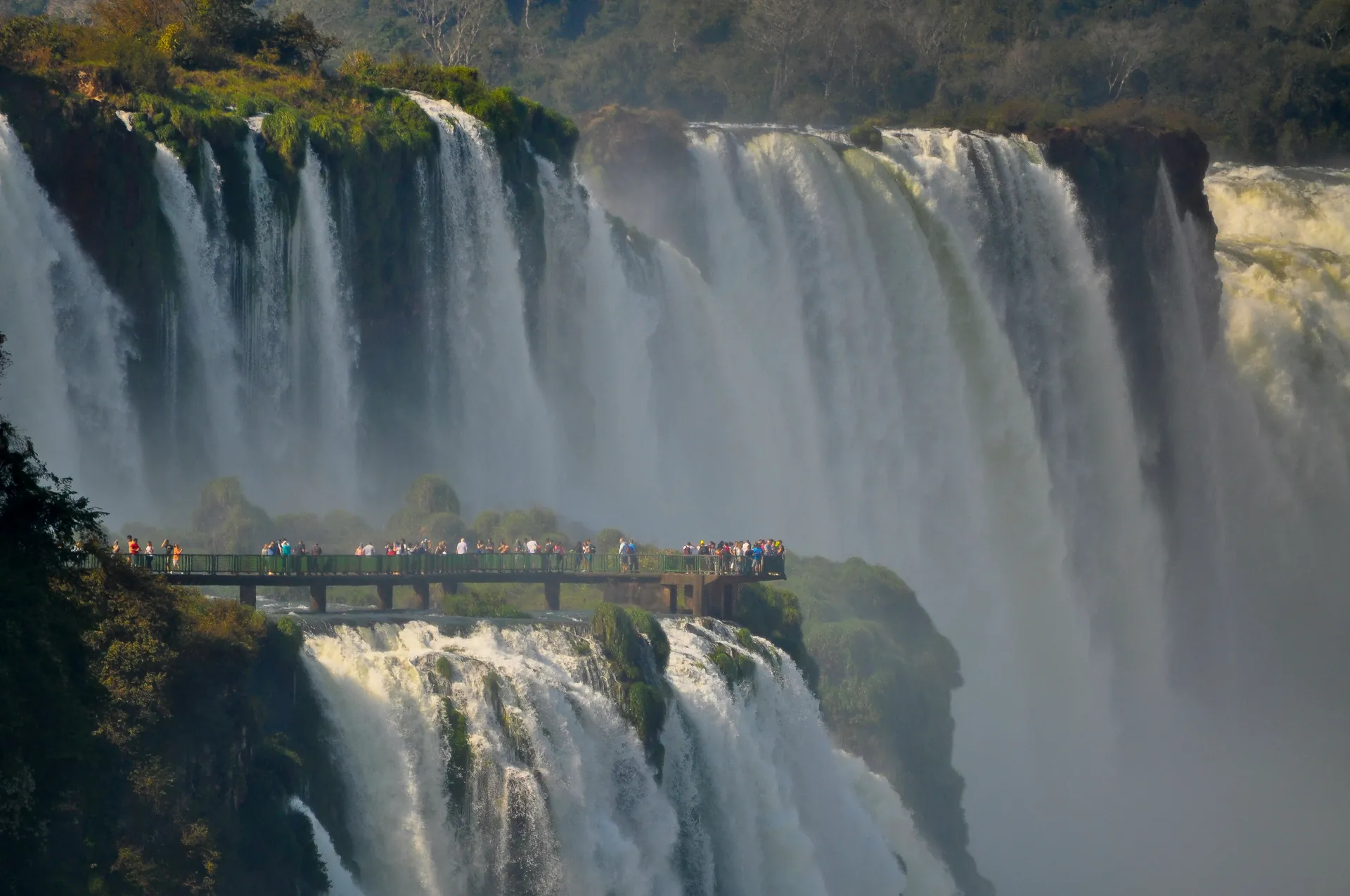
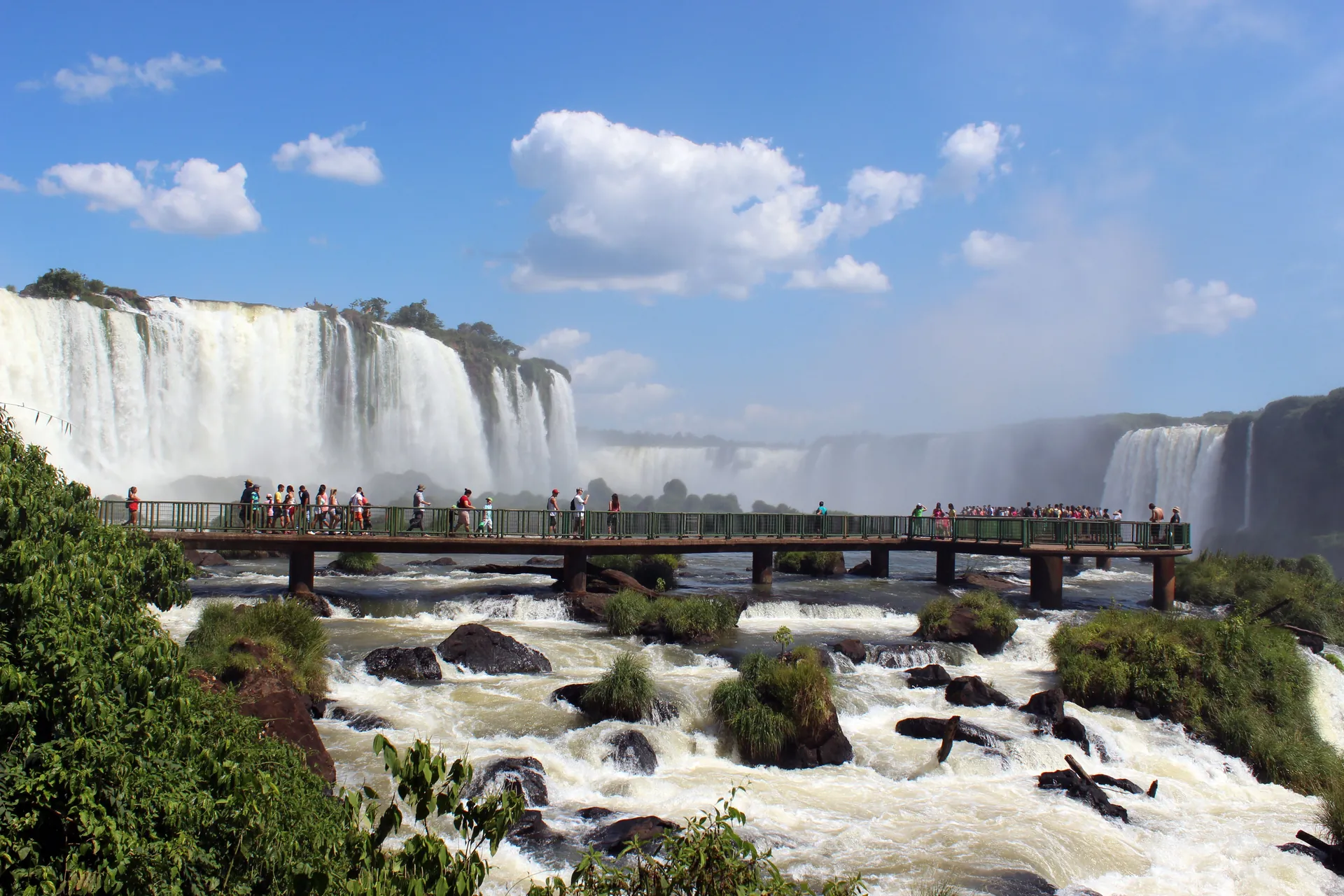
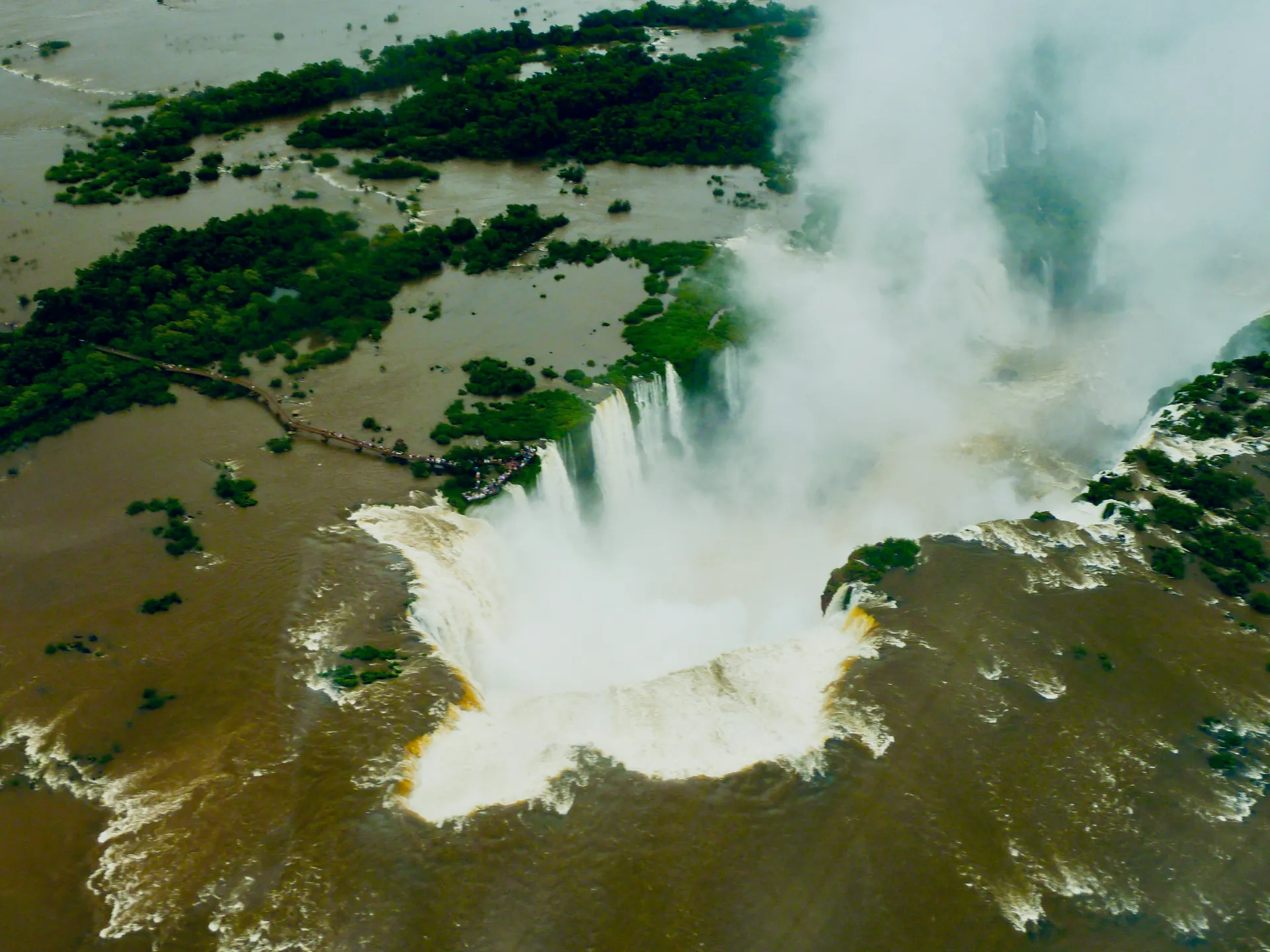
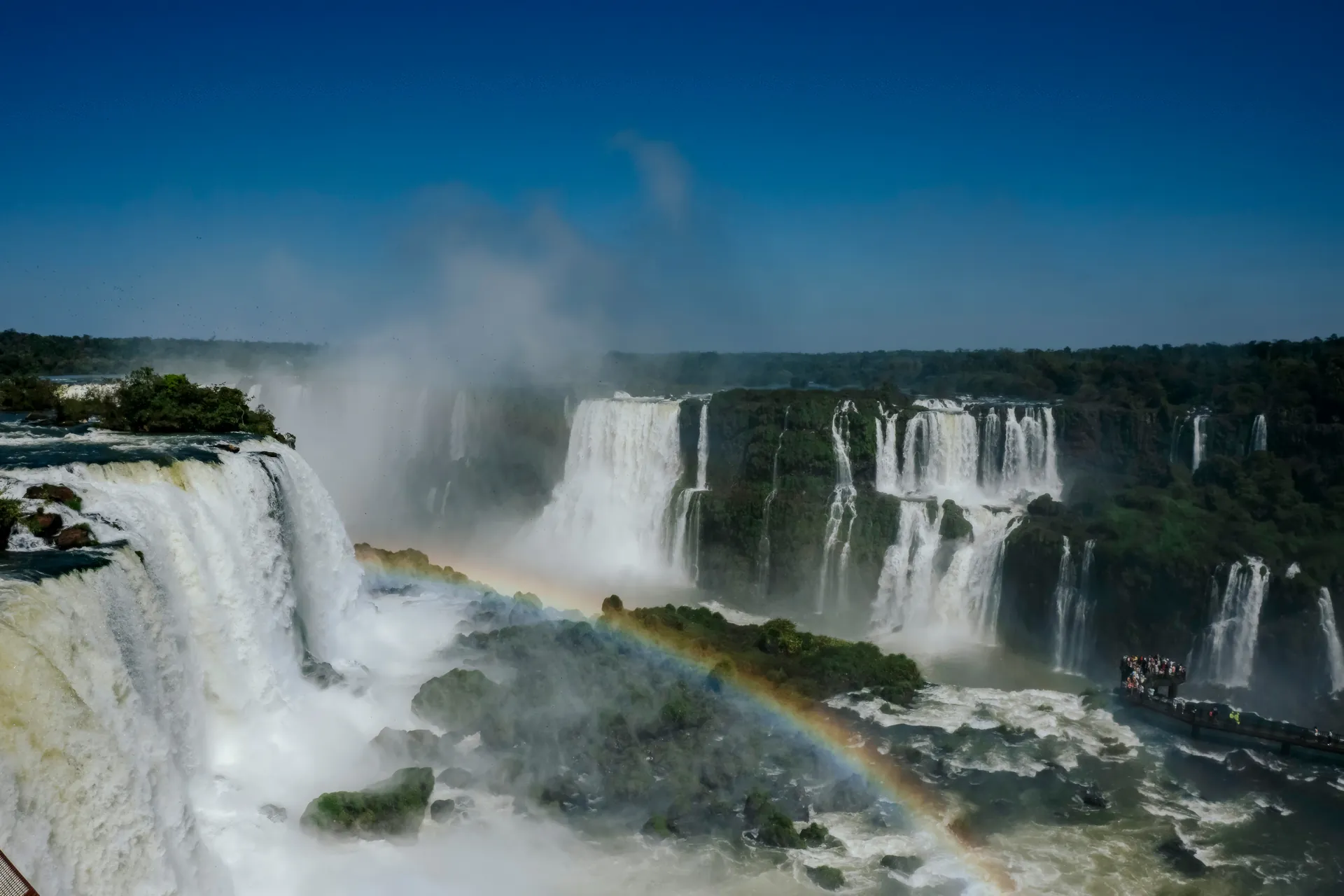
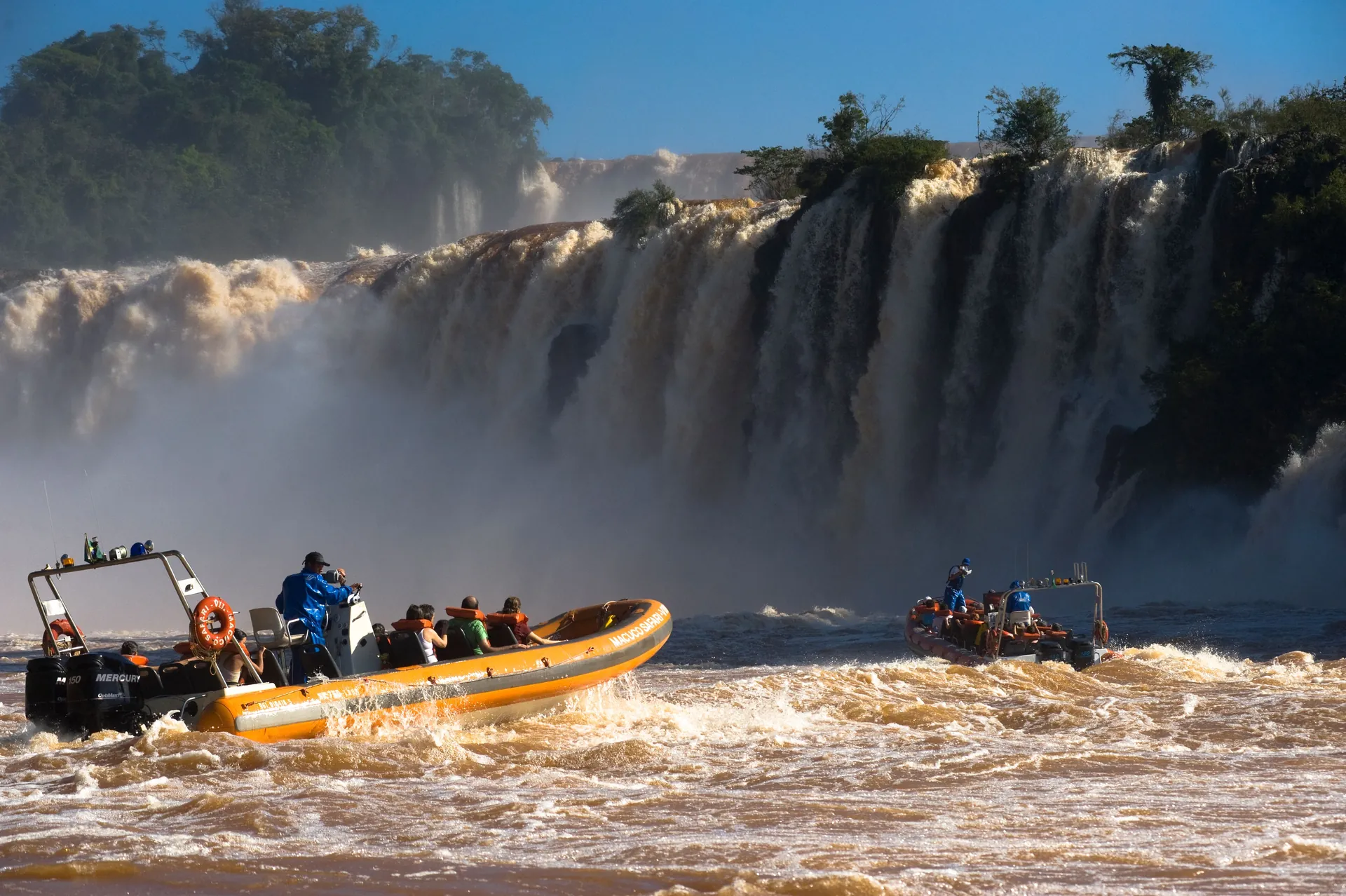
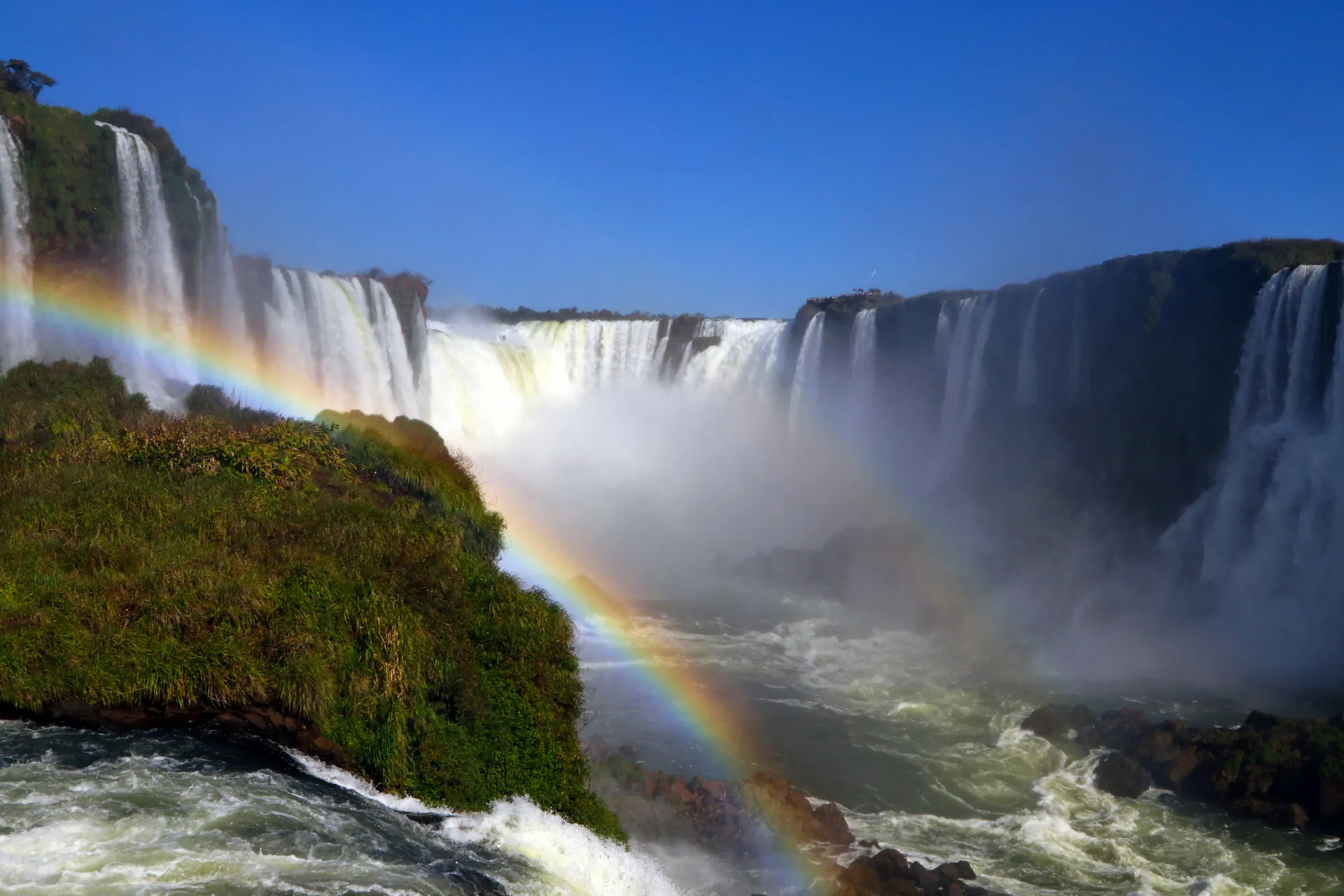
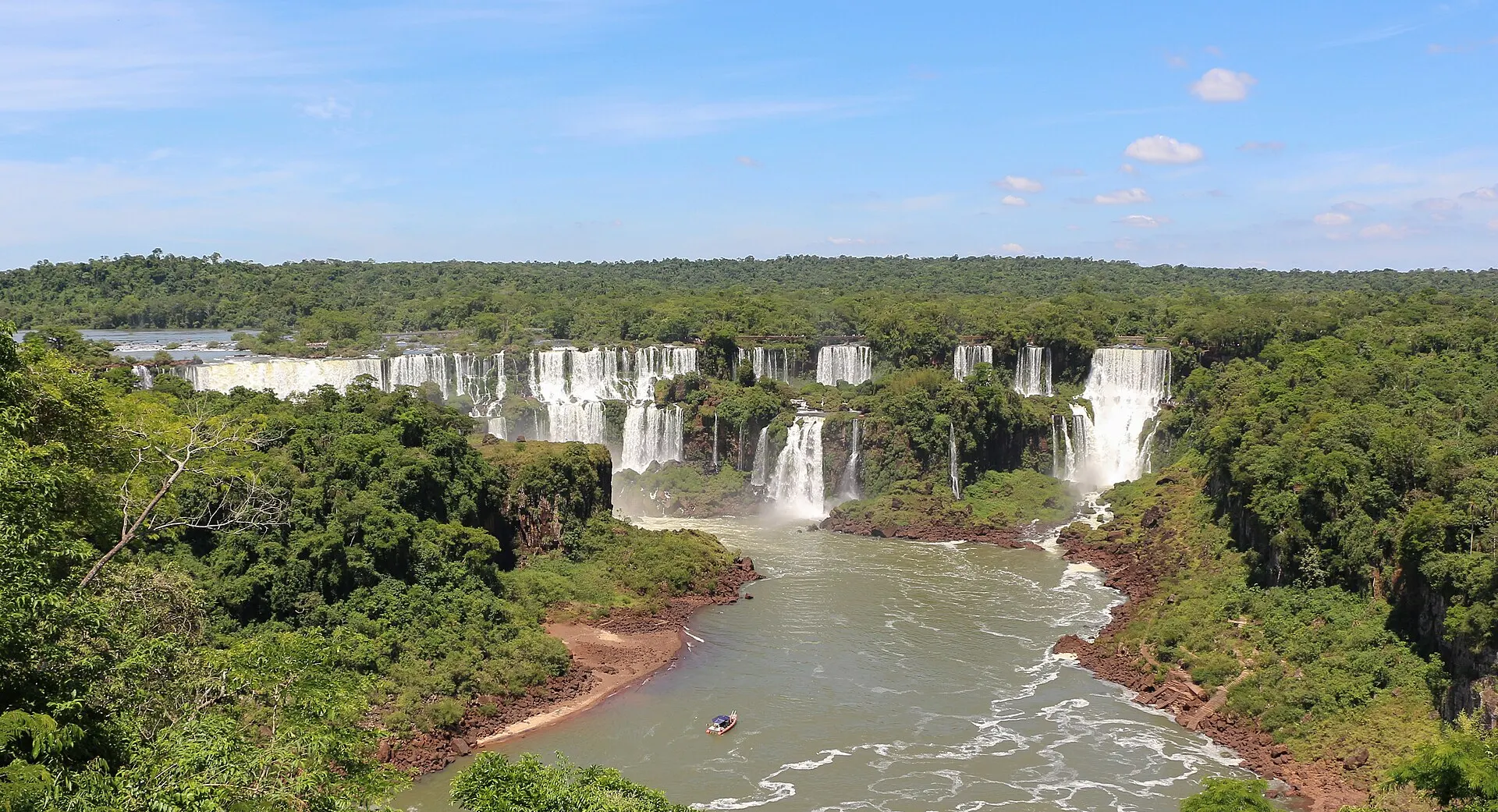
People arrive at Iguaçu thinking they know what a waterfall looks like, and then they hear it before they see it. This is not a single drop but a system of around 275 separate falls curved in a horseshoe nearly three kilometres wide, pouring the entire Iguaçu River off a shelf of rock in the middle of a subtropical rainforest. It is taller than Niagara and more than twice as wide, and the scale simply does not photograph. You have to stand in the spray.
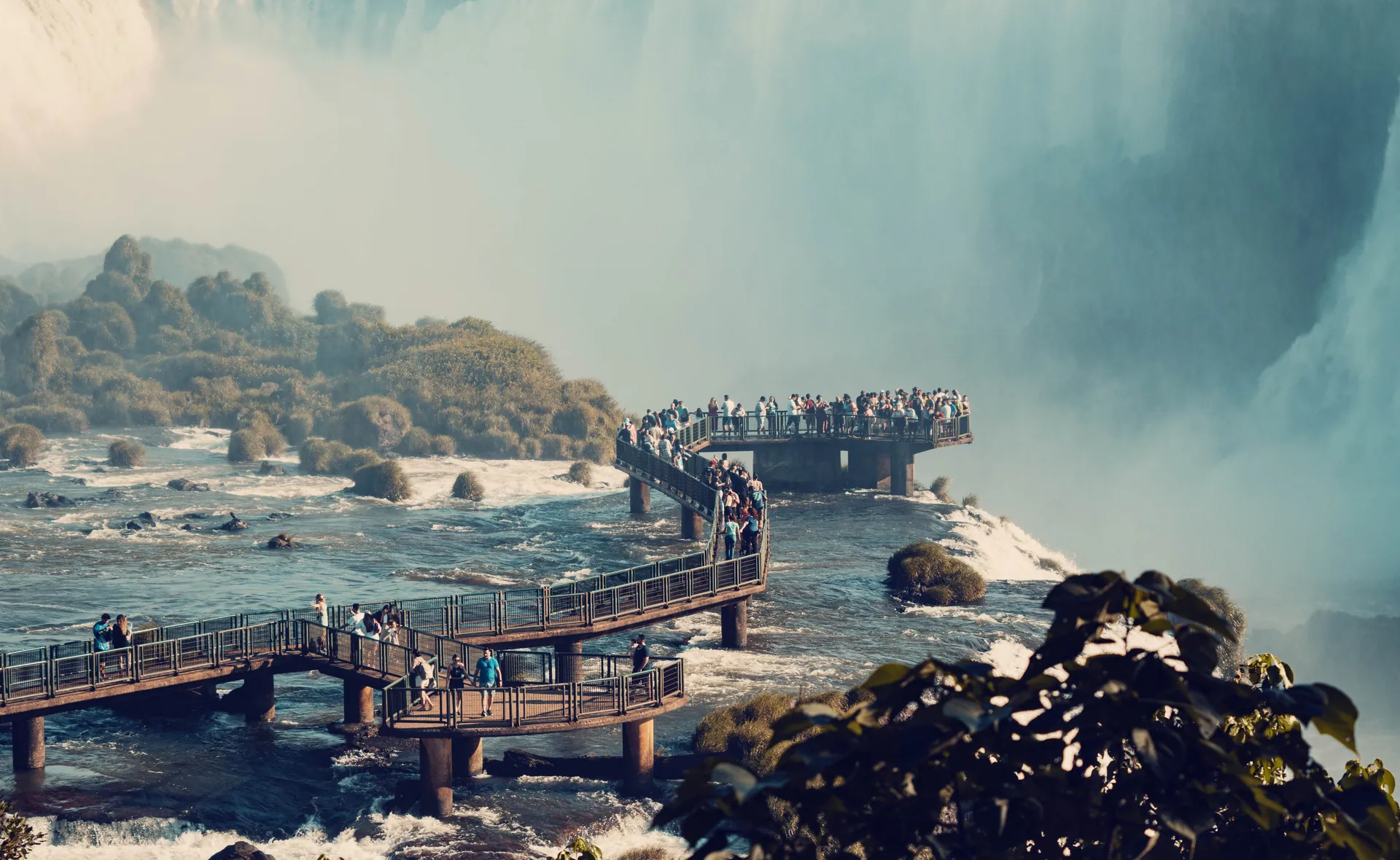
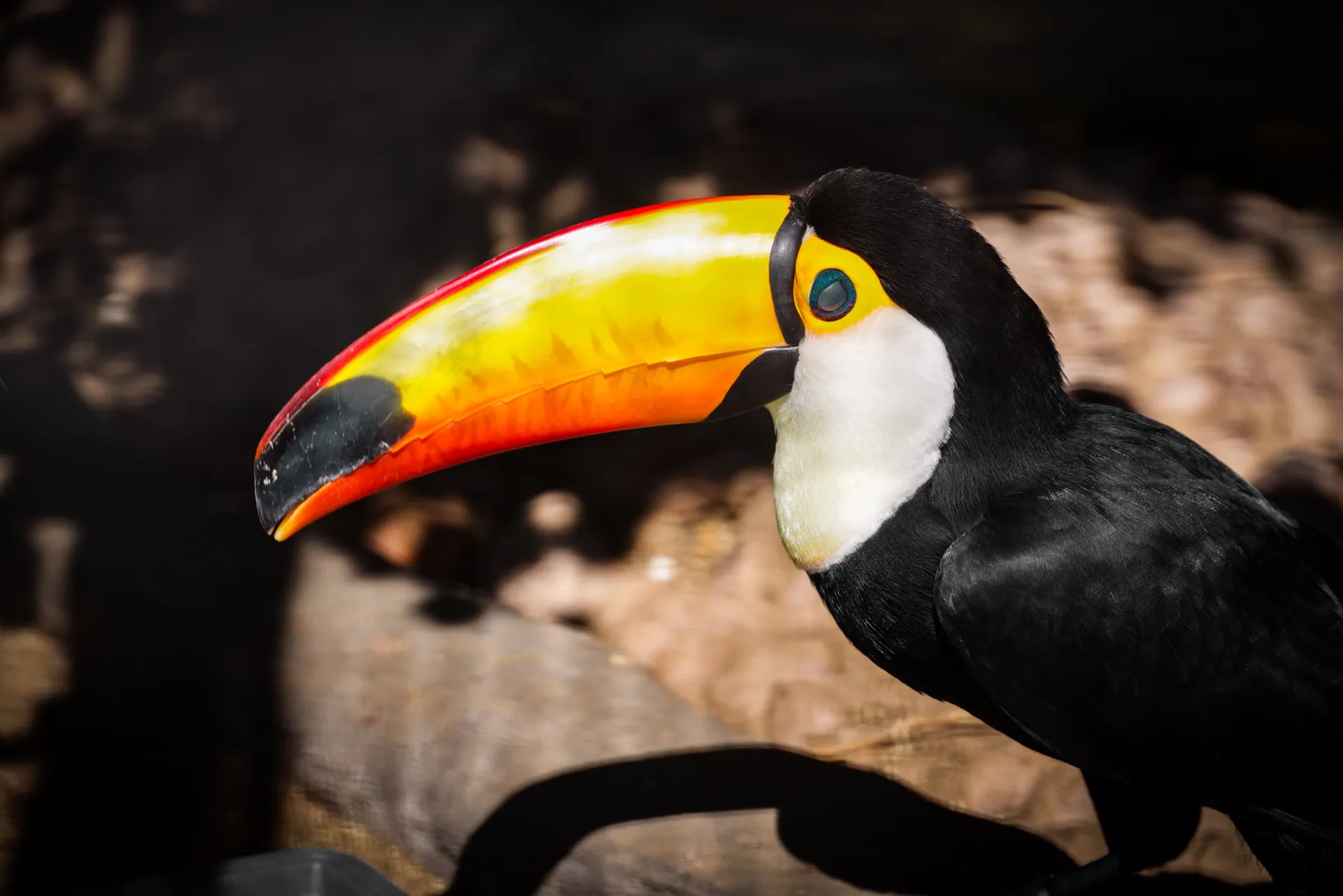
The centrepiece has one of the great names in nature: the Garganta do Diabo, the Devil’s Throat, an 80-metre-high horseshoe where half the river disappears into a permanent cloud of mist and noise. Coatis patrol the walkways, toucans cross overhead, and butterflies land on you between viewpoints. It is a national park on both sides of the border, which is the single most important thing to understand before you go.
Because the river is the border, the falls belong to two countries at once. Brazil owns the wide-angle view. Argentina owns the up-close one. They are not the same visit, and choosing only one is the mistake almost everyone comes to regret.