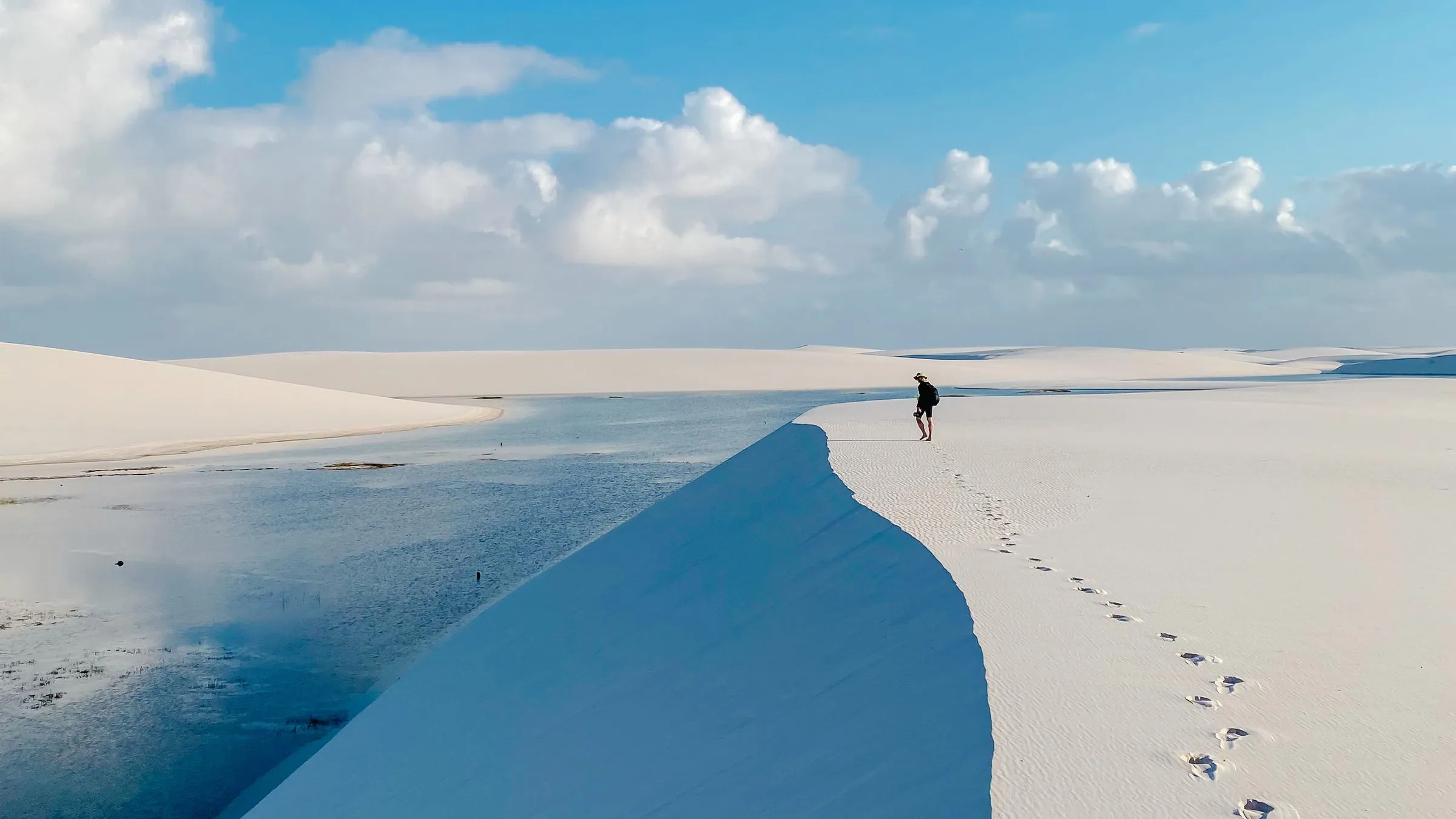
Three days on foot across Brazil’s white-sand sea.
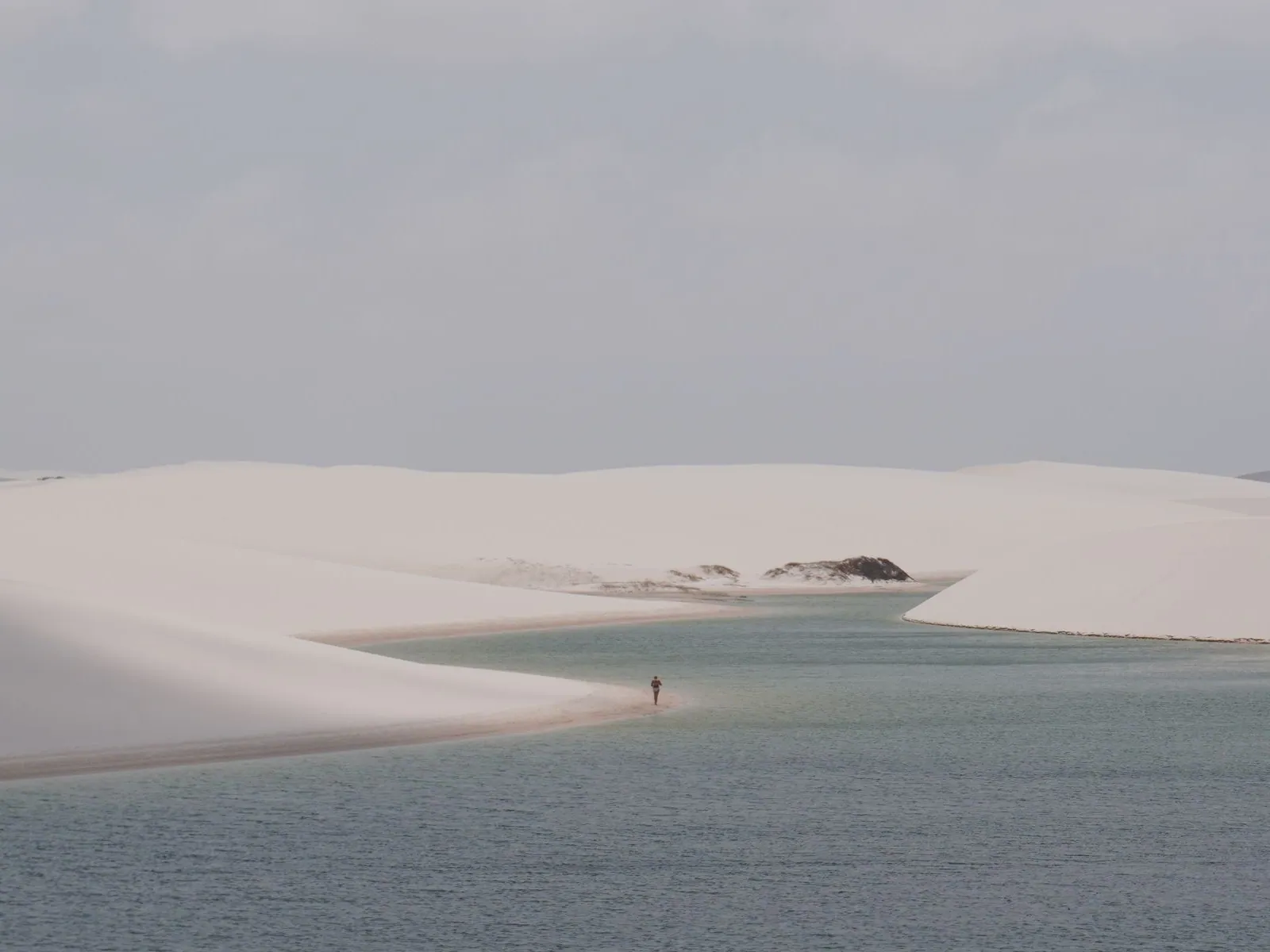
No vehicle is allowed where this trek goes. You walk out of Santo Amaro by headlamp, swim in lagoons
without names or footprints, sleep in hammocks with the families of two oases marooned in the sand,
and top a final crest to find the Atlantic waiting.
Everyone photographs the Lençóis. Almost nobody crosses them.
The Lençóis Maranhenses are usually seen in half-day bites: a 4x4 to a famous lagoon, photos,
back by dark. But the park is 155,000 hectares, UNESCO-listed, and its interior is closed to
every engine ever built. The only way through is the oldest one. Brazilians call the walk the
travessia, and it is one of the great treks of South America hiding in plain sight.
We run it privately, in five unhurried days: three on foot from Santo Amaro to Atins, roughly
forty kilometres of dune and lagoon, with the nights in the care of the two native families’
oases that have survived in the middle of the sand for a century. Your luggage travels the easy
way round. You do not.
On foot across the sand sea, dune crest to Atlantic
0
Roads, engines or crowds where the trek goes
2
Oasis nights in hammocks with the families who live there
155,000
Hectares of dunes and lagoons, UNESCO-listed since 2024
Every pin is a day. Click one to read it.
Os oásis
The keepers of the interior
Two inhabited oases survive inside the dune field, and the crossing sleeps in both. Staying with
their families is not a detour from the experience. It is the experience, and your nights put
income directly into the communities that keep the interior alive.
I
Night of day 2
Queimada dos Britos
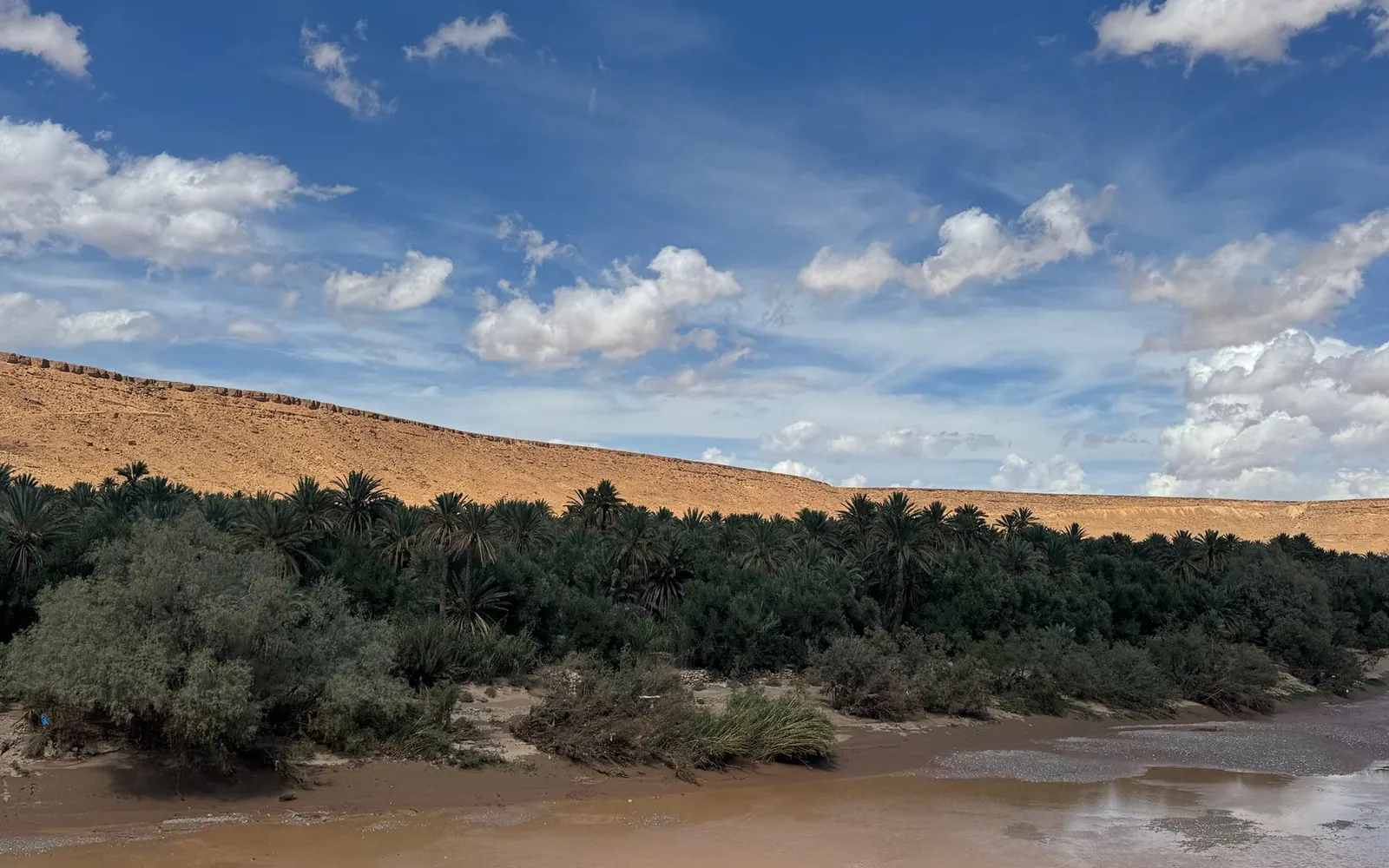
The larger of the two oases, founded almost a century ago by Manoel Brito, who walked into the dunes to escape the great drought and never left. Around two hundred of his descendants still live here between the palms, off goats, fishing and, lately, hosting walkers.
II
Night of day 3
Baixa Grande
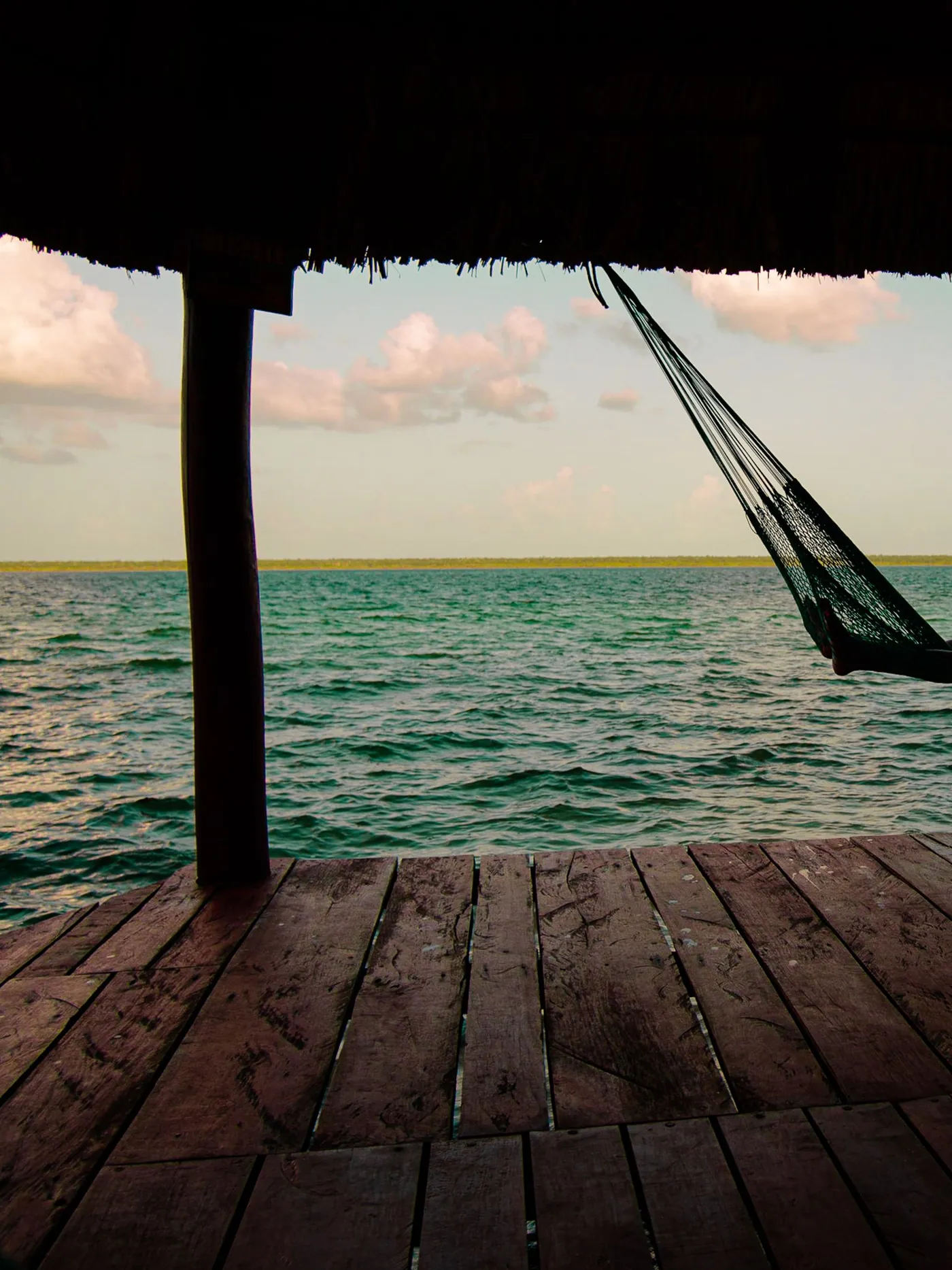
The smaller, quieter neighbour, a dozen or so families around a low freshwater plain. Hammocks strung under a shared roof, dinner cooked over the fire, a couple of hours of solar-powered light, and then the loudest silence you have ever heard.
III
Days 2 to 4
The lagoons between
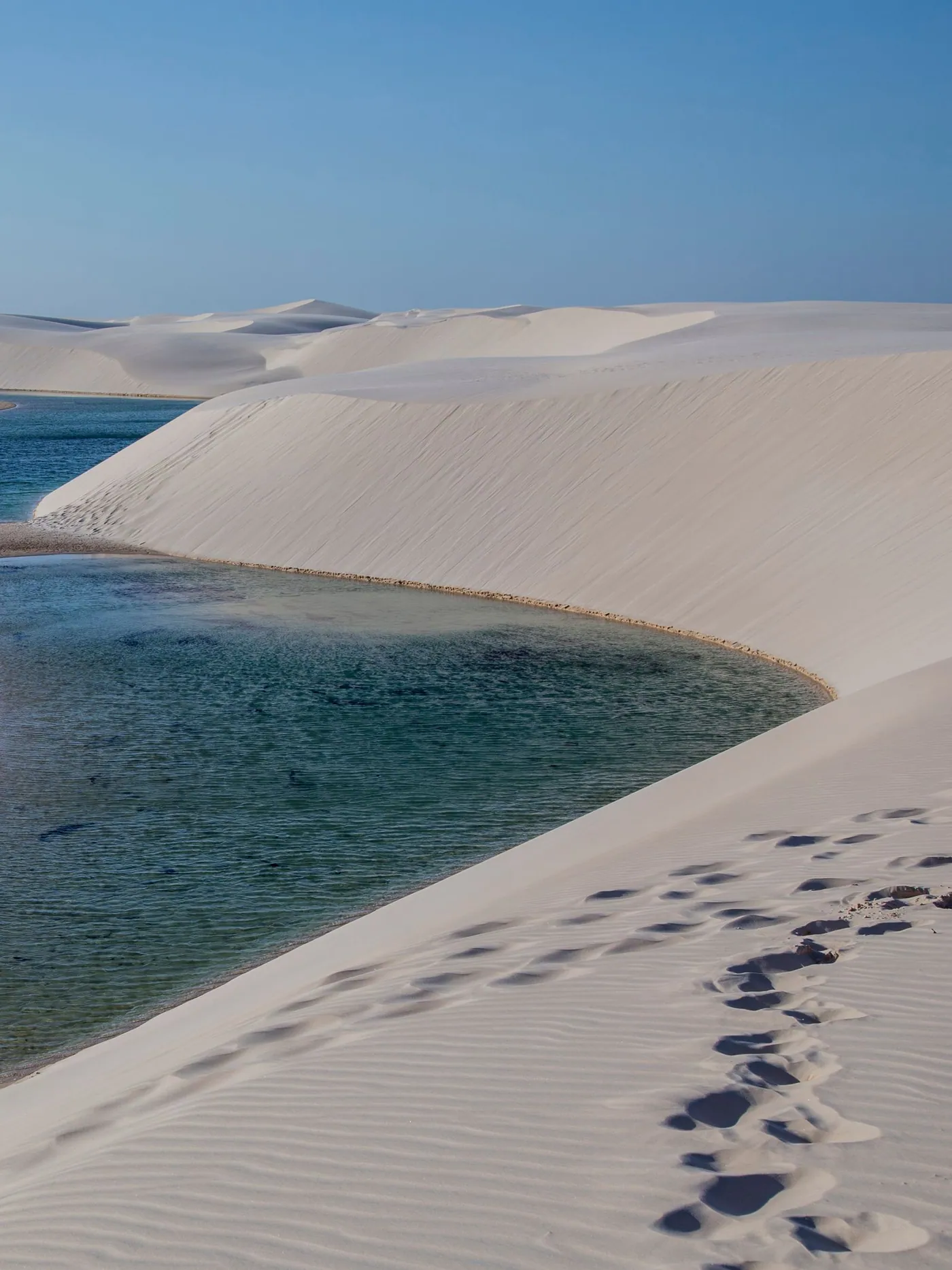
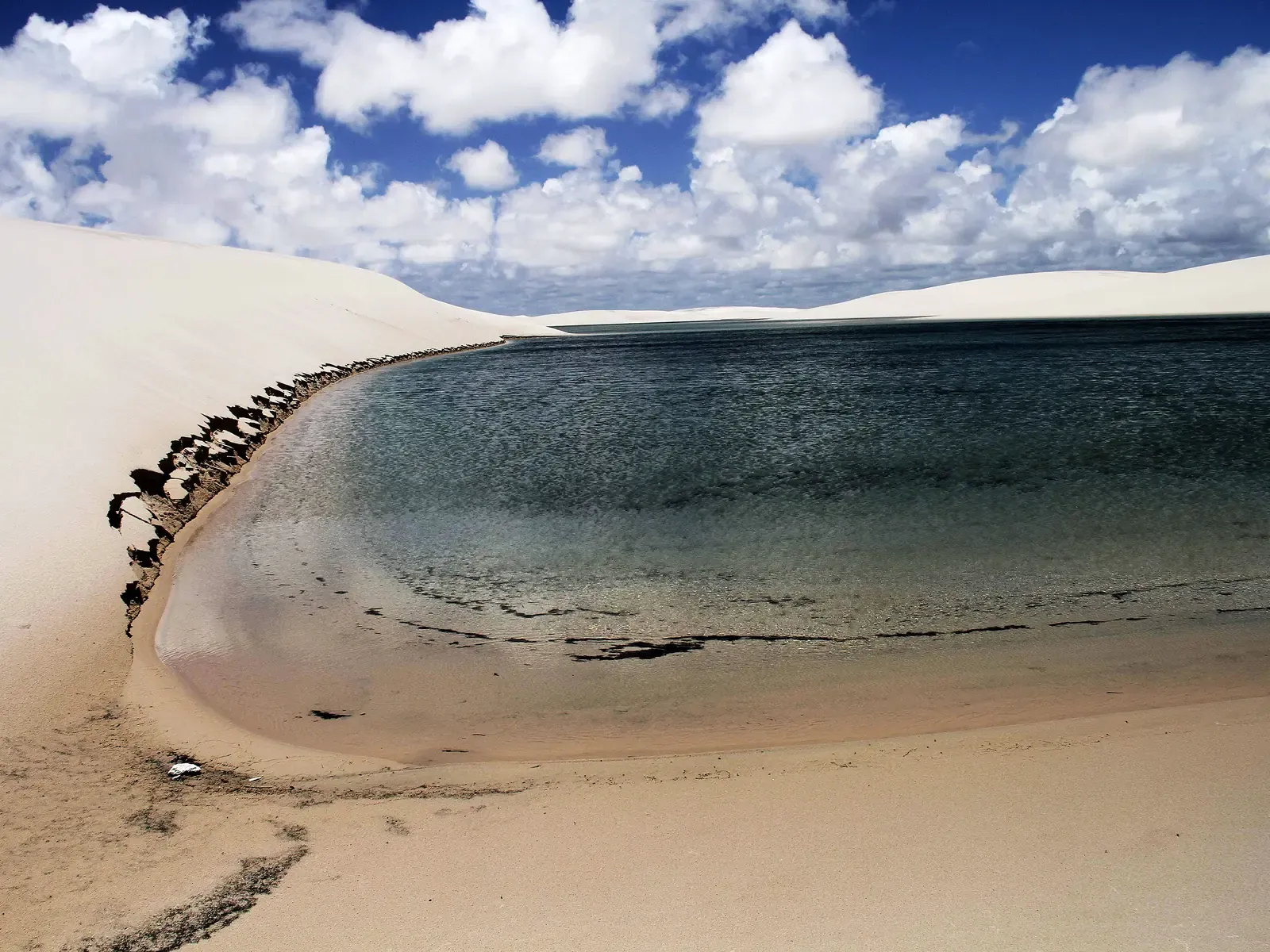
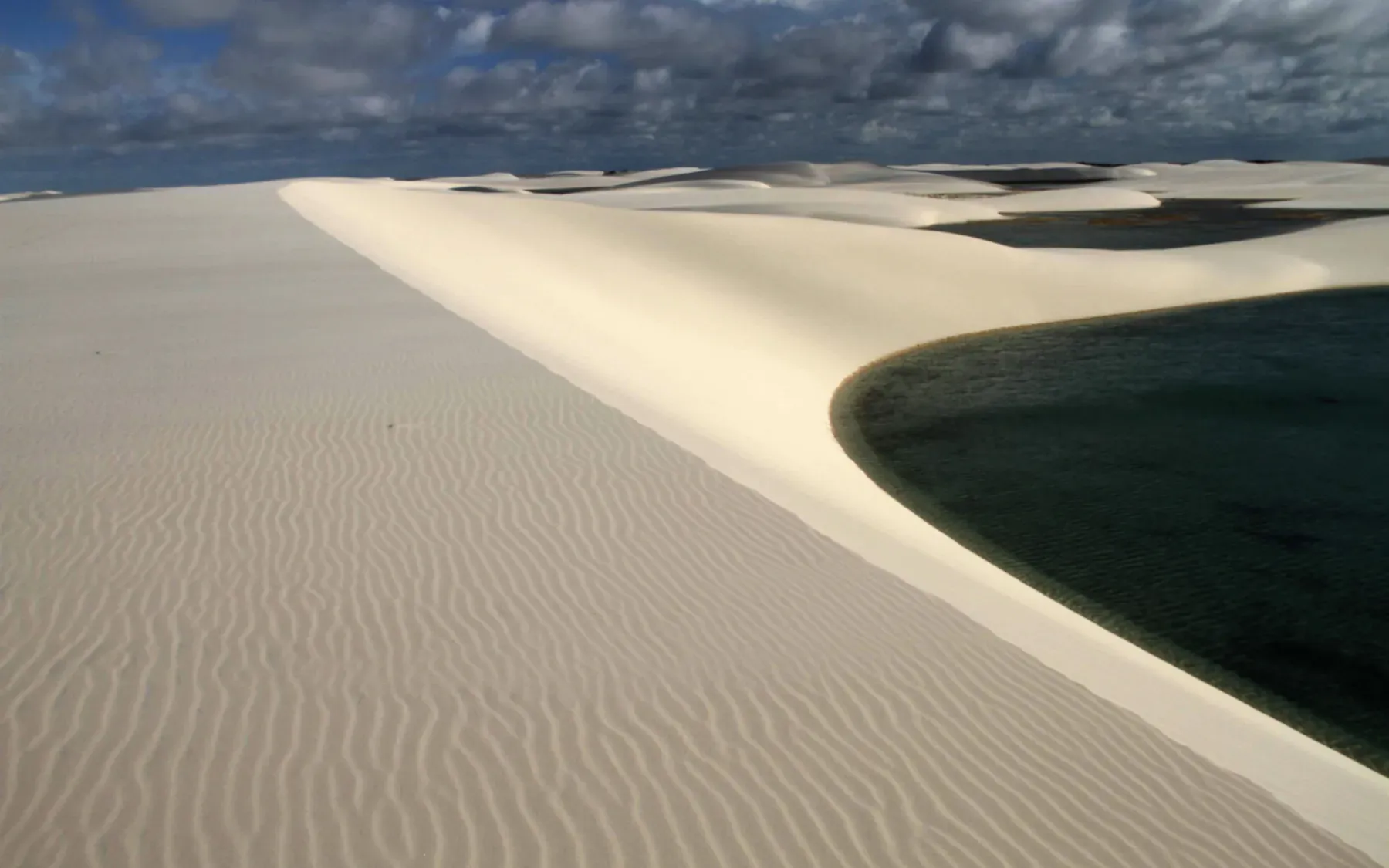
Off the 4x4 circuits, the lagoons have no boardwalks and mostly no names. You crest a dune, one appears, and it is yours: warm rainwater filtered through miles of white sand, often with not one other footprint on its shore.
Santo Amaro → Atins
Five days, forty kilometres, one sea
A sample rhythm, not a timetable. Every departure is private, and the stages flex around your legs,
your dates and the state of the lagoons.
1Day 1 · Santo Amaro · by 4x4
The approach
The town where the road gives up
A private 4x4 collects you in São Luís and drives east, and for the last hour the asphalt simply surrenders to sand track. Santo Amaro is the quiet gateway of the Lençóis, a small town pressed against the south-western edge of the dune field, and the reason so few travellers come this way is exactly why you are: the crossing starts where the crowds do not.
In the late afternoon you get a first taste of what you signed up for. A short walk out of town puts you on the opening dunes of the park, and a swim in a lagoon like Gaivota rinses off the road. Watch the sun set over a horizon made entirely of sand, eat well, and sleep early. From tomorrow, the alarm clocks are set by the desert.
Private 4x4 from São Luís
First dunes at sunset
Early night before the crossing
Overnight · A simple, welcoming pousada in Santo Amaro
The swim · A first lagoon at the edge of the dune field
2Day 2 · Queimada dos Britos · 14 km on foot
Into the sand sea
Headlamps, sunrise, and an island of palms
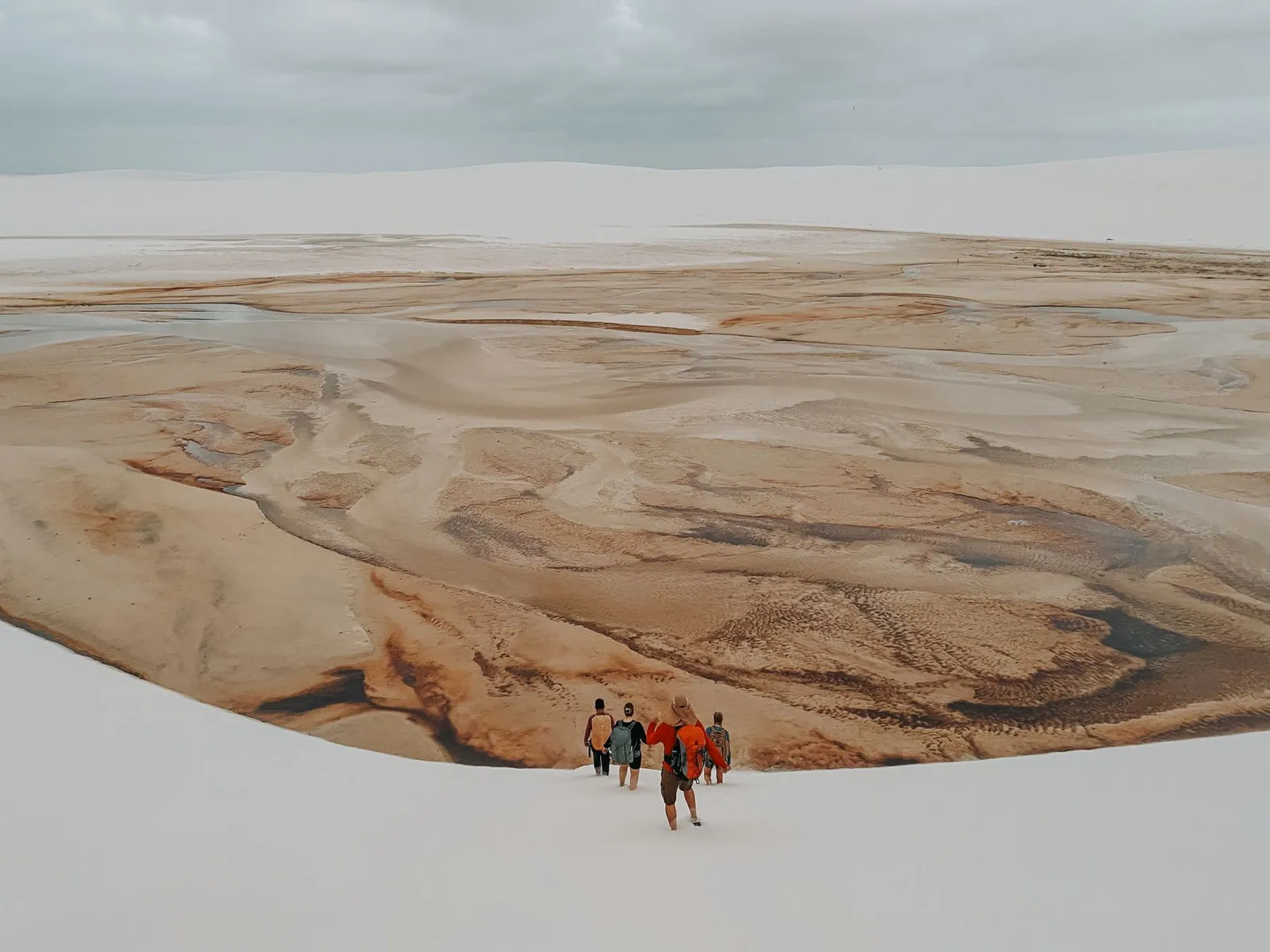
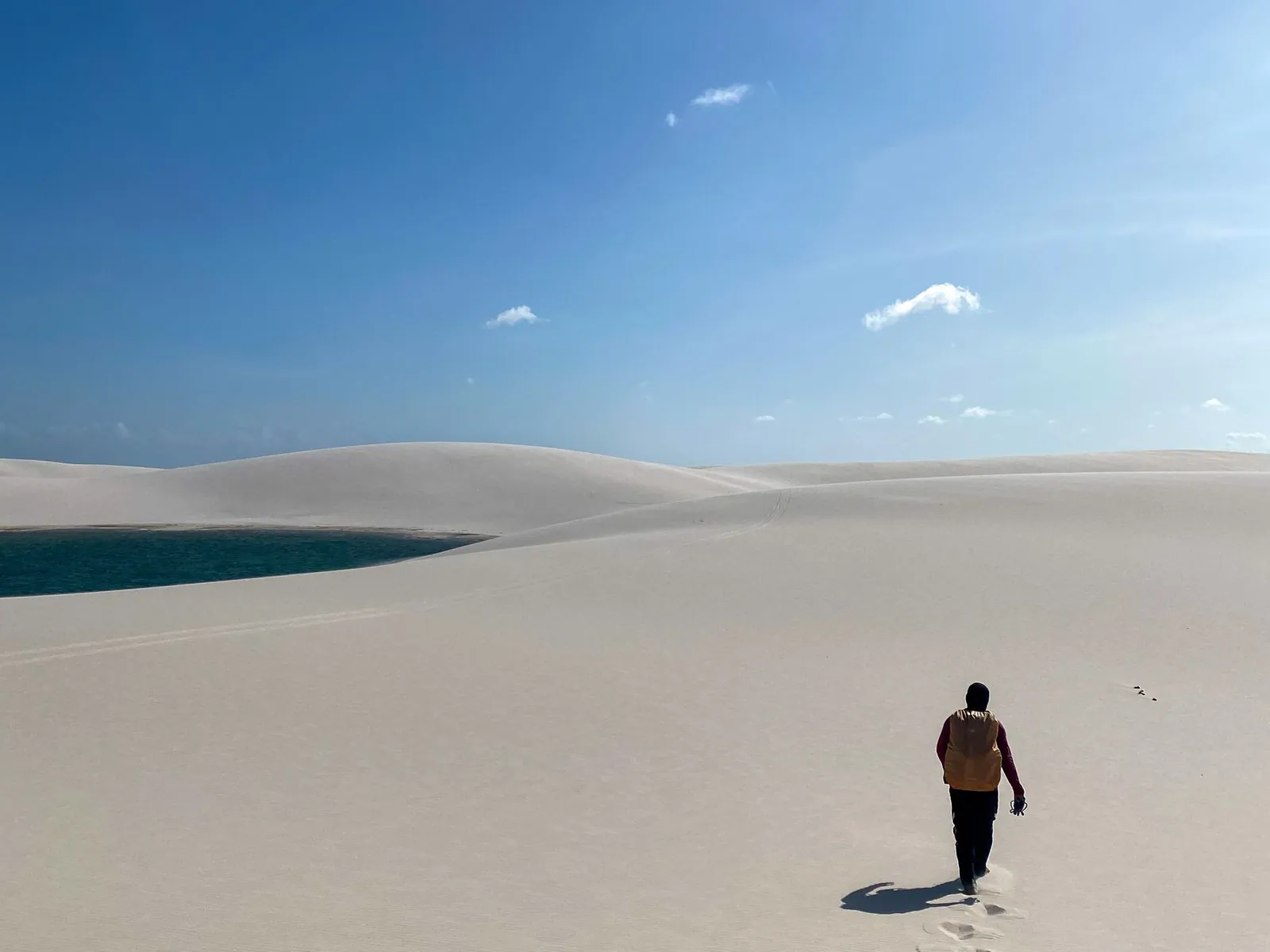
The day starts at half past three with strong coffee in the dark. Then headlamps on, and you walk out of town into a world with no roads, no engines and no lights, just a guide who was born here reading dunes the way other people read street signs. Walking before dawn is not a stunt: the sand is cool underfoot, the air is soft, and when the sun comes up you are already deep inside the park, standing on a crest as the whole sand sea turns pink around you.
The kilometres pass in a rhythm of dune, lagoon, swim, repeat. By late morning a smudge of green appears on the horizon and slowly becomes Queimada dos Britos, the improbable oasis where Manoel Brito settled a century ago and where some two hundred of his descendants still live. The afternoon is yours to spend the oasis way: a hammock in the shade, goats wandering home across the sand, and a slow climb to a high dune for a sunset with not another soul in sight.
Pre-dawn headlamp start
Sunrise from a dune crest
Lagoon swims on route
The Brito family oasis
Overnight · Hammocks at a native family homestead in the oasis
The swim · Whichever lagoon is fullest, chosen by your guide on the day
On the table · Home cooking by your hosts: fish or free-range chicken, rice, beans
3Day 3 · Baixa Grande · 9 km on foot
Oasis to oasis
The short stage, and the loudest silence
Today is the crossing at its most generous: a shorter walk between the two inhabited oases of the park, with time to waste gloriously on the way. The dunes here fold around lagoon after lagoon that no vehicle can reach, which means every single one is empty. Swim in three, or five, or lose count. Your guide has a favourite and will not tell you its name, mostly because it does not have one.
Baixa Grande is smaller than its neighbour, a dozen or so families around a low green plain, and the welcome is correspondingly personal. Dinner happens as the generator hums out its couple of evening hours, and then the desert plays its final card. There is no light pollution here in any direction for dozens of kilometres, and the Milky Way comes down so close and so bright you will understand why nobody in the oasis bothers with a planetarium word for it. They just call it the sky.
Empty, unnamed lagoons
The smaller oasis
Dinner with your host family
The Milky Way at full volume
Overnight · Hammocks with a native family in Baixa Grande
The swim · As many unnamed lagoons as you have time for
On the table · Dinner cooked over fire, eaten under a straw roof
4Day 4 · Atins · 17 km on foot
The long walk to the sea
The last crest, and the Atlantic behind it
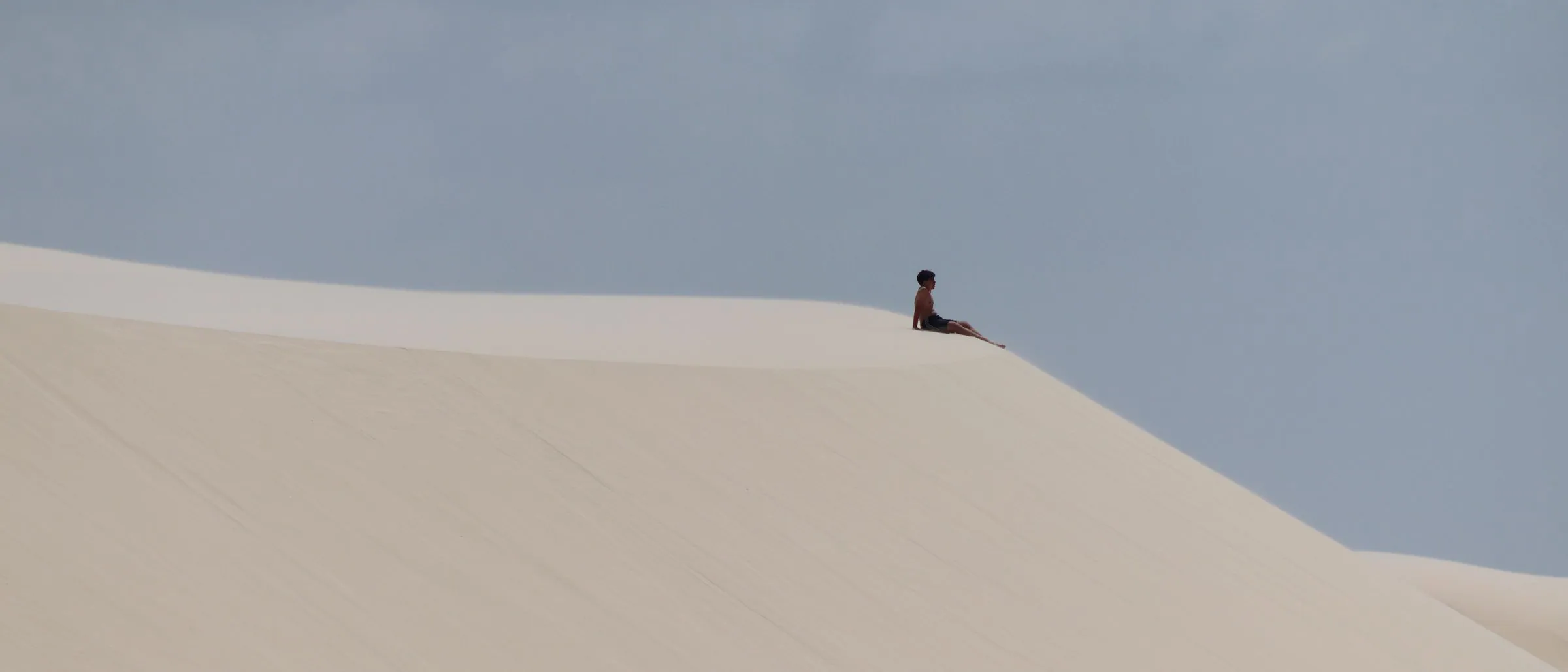
The longest stage starts earliest, three in the morning, and it is the one you will tell people about. Hours of walking by headlamp with the stars wheeling overhead, sunrise met somewhere in the middle of the sand sea, and then a long morning of dunes slowly flattening toward the coast. And at some point it happens: you top one more crest exactly like a hundred before it, and there is the Atlantic, and you understand in your legs what crossing the Lençóis actually means.
The dune field lets you out at Canto do Atins, a scatter of beach kitchens famous across Brazil for one dish, and lunch is non-negotiable: grilled prawns the size of your hand, earned like few lunches ever are. The afternoon rolls you gently back into the world in Atins, a fishing village with streets of sand where the Preguiças river meets the ocean. A real bed, a real shower, and the deep, smug sleep of someone who walked here.
3 AM start under stars
The crest where the sea appears
Legendary prawns at Canto do Atins
First bed in three nights
Overnight · A barefoot pousada in Atins
The swim · The Atlantic, finally, at the end of the walk
On the table · The famous grilled prawns of Canto do Atins
5Day 5 · Barreirinhas · by riverboat
Down the Preguiças
The river carries you back
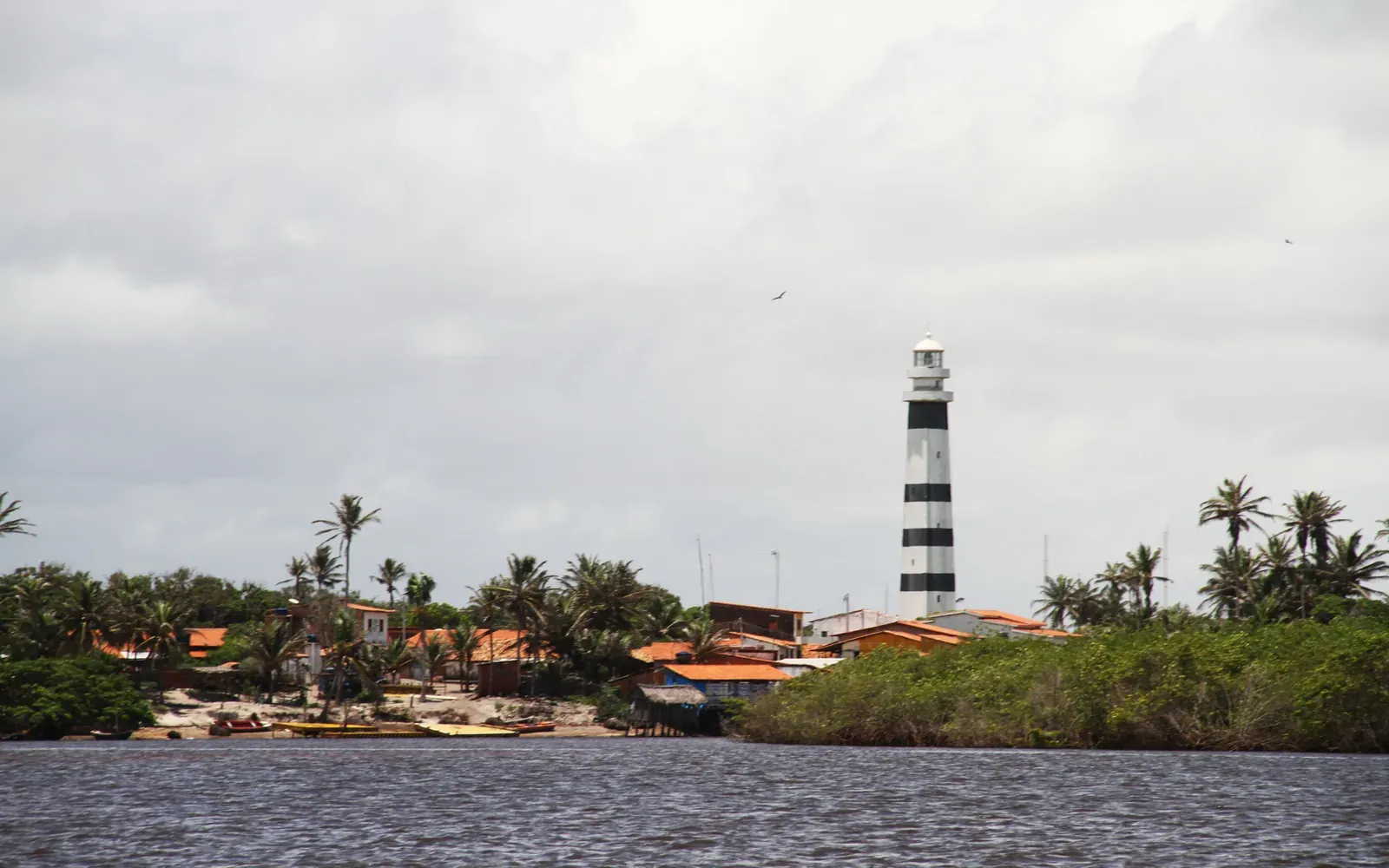
After three days of carrying yourself, the last leg is pure grace: a boat down the Rio Preguiças, the river doing all the work. The water loops between mangrove and dune, small monkeys heckle the stop at Vassouras, and at Mandacaru you can climb the lighthouse’s 160 steps for one last look at the whole improbable thing you just walked across, white to the horizon, with the sea stitched along its edge.
The boat lands you in Barreirinhas, where a private car waits for the run back to São Luís and your flight onward. Or, and we say this with love for your calendar, the road east from here is the Rota das Emoções, and travellers with a week to spare have been known to keep going. Either way, the Lençóis are no longer a place you saw. They are a place you crossed.
Riverboat down the Preguiças
Mandacaru lighthouse
Private transfer to São Luís
Or continue east to Jericoacoara
Overnight · Home, or onward: Atins connects straight into the Rota das Emoções
The swim · The Preguiças, tea-calm, from the boat stops
O relógio do caminhante
The walker’s clock
A trekking day in the Lençóis does not run on your usual hours. It runs on the desert’s, and
the desert’s are better.
03:30
Coffee in the dark
The kettle is the only sound in the oasis. You drink strong coffee under more stars than you knew existed.
04:15
Headlamps on
A small line of lights sets out across cool sand. Your guide navigates by dune shapes the way you use street names.
06:00
Sunrise from a crest
The sand sea turns grey, then pink, then blinding white. This is why the day started at half past three.
08:30
The first swim
A lagoon appears between dunes exactly when you need it. Warm rainwater, filtered through miles of sand, no one else on its shore.
11:00
The oasis appears
A smudge of green becomes palms, then houses, then your hosts waving. The day’s walking is done before the worst of the heat.
13:00
Hammock hours
Lunch, then the sacred oasis siesta. The wind moves the palms, the goats find shade, and so do you.
17:30
The sunset dune
A slow climb up the tallest dune around, and a sunset over pure sand with not another visitor in any direction.
20:00
The sky, at full volume
Zero light pollution for dozens of kilometres. The Milky Way is bright enough to walk by, and dinner ends when the generator does.
All handled
What travels with you
A guide born in these dunes
Your crossing is led by a native local guide who grew up walking these routes, alongside guiding in English or German. Nobody navigates 155,000 hectares of shifting sand from a book.
Every night, both worlds
Pousadas in Santo Amaro and Atins at the ends, and two nights in hammocks with the oasis families in between, blankets and all. Rustic where it should be, comfortable where it can be.
Luggage the easy way round
You walk with a small daypack. Your main luggage travels around the park by 4x4 and boat and is waiting in Atins when you arrive. The desert asks enough of you already.
Every meal in the sand
From the first Santo Amaro dinner to the celebration prawns at Canto do Atins, including everything your host families cook in the oases. Water and trail snacks on every walking day.
Both ends of the trek
Private 4x4 from São Luís to Santo Amaro, the riverboat down the Preguiças, and the private transfer back to São Luís. Park permissions and fees handled.
Insurance and a safety net
Personal travel insurance for the route, and a team that lives in Brazil and answers the phone, before, during and after. There is no signal in the park; there is a plan instead.
Not included: flights, drinks beyond water on the trail, and personal extras. No hidden lines, ever.
Good to know
Honest answers first
How fit do I need to be? +
Honestly: reasonably fit, not athletic. The stages are 9 to 17 kilometres on sand, and the pre-dawn starts exist precisely so you walk in the cool hours and are in a hammock before the heat peaks. Most of the surface is wind-packed and firmer than you expect, and the pace is set by swimming stops, not stopwatches. If you can enjoy a full day of walking at home, you can enjoy this. It is the best version of tired there is.
When should we go? +
The rains fall roughly January to May and the lagoons are at their fullest from late May into September, which is the sweet spot for the crossing. July and August add reliably dry days and the strong, cooling wind the Lençóis are famous for. From October the lagoons slowly shrink until the rains return. Tell us your dates and we will be honest about what you will find.
What are the oasis nights actually like? +
Beautiful and genuinely simple, in that order. You sleep in a hammock with a blanket under a shared roof, the bathroom is shared and the shower is cold, and electricity comes from solar panels or a generator for a couple of evening hours. There is no mobile signal at all. What you get in exchange is dinner cooked by people who have lived surrounded by sand for four generations, and a night sky very few travellers ever see. If a hammock is a dealbreaker, some homesteads can arrange a simple bed; say so and we will plan around it.
What do I carry, and what happens to my luggage? +
You walk with a daypack of about 20 to 25 litres: swimwear, sun protection, a headlamp, a light jacket for the pre-dawn hours, and not much else. Your main luggage goes the easy way round by 4x4 and boat and is waiting at your pousada in Atins. Most people walk in sandals or barefoot; the sand is clean and firm, and hiking boots mostly just collect it.
Is this for children or for less active travellers? +
The full crossing suits walkers from their early teens up who genuinely like being outdoors all day. It is not the right trip for small children or anyone who would not enjoy 14 kilometres on foot. The good news: the Lençóis have gentler doors. We build wonderful lagoon days out of Santo Amaro, Barreirinhas and Atins by 4x4, and a one-night taste of the crossing with a single oasis stay is a beautiful compromise.
Can we extend it, shorten it, or keep travelling? +
All three. A rest day in an oasis or an extra Atins beach day slot in naturally, a shorter two-day version reaches one oasis instead of two, and Atins is literally the first stop of our Rota das Emoções, so the crossing chains straight into a week that ends in Jericoacoara. Every departure is private, so the five days above are a starting shape, not a cage.
What remains
Sossego
Portuguese has a word for what three days of sand, stars and silence do to a person: sossego, a quiet so deep and unhurried that no clock survives contact with it. You will notice it on the flight home, when the noise of the world comes back and, for once, does not stick.
Around forty kilometres on foot, two oasis nights in a hammock, one sea earned the hard way. Tell us your dates and how you like to walk. We will shape the crossing around you, send your luggage the easy way round, and have the prawns waiting at the far side.
This site uses third-party website tracking technologies to provide and continually improve our services for you, and to display advertisements according to users' interests. I agree and may revoke or change my consent at any time with effect for the future.